

Audio Research DAC9
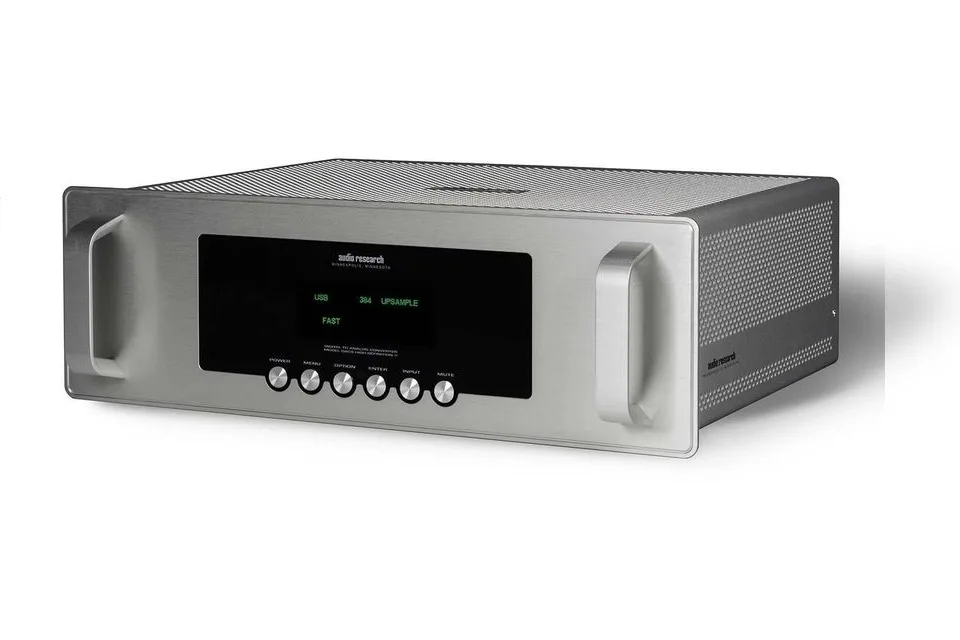
Audio Research digital-to-analogue converter with a 6H30 tube output stage, featuring a quad DAC architecture and five digital inputs.
Description
The DAC9 from Audio Research is a digital-to-analogue converter designed to decode the main digital sources of a hi-fi system, from a network player to a computer, via a CD player or a dedicated transport. It is positioned as the central element of a high-end digital chain, tasked with transforming the binary signal into analogue music before the preamplification stage.
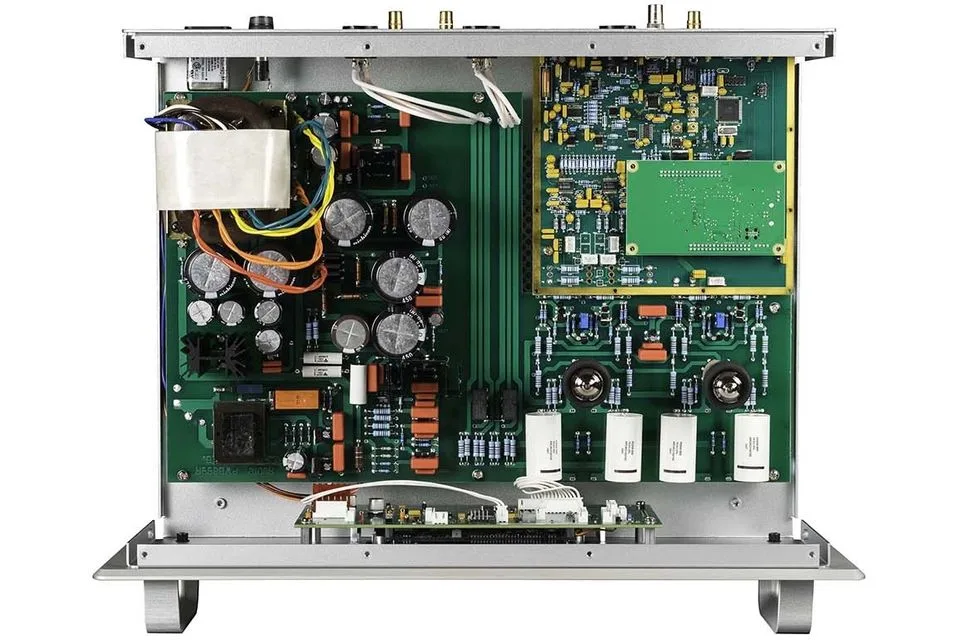
Its distinctive feature lies in its analogue output stage, entrusted to a pair of 6H30 tubes, an architecture rare in the world of digital converters, most DACs relying on fully transistorised stages. Digital processing is based on a quad DAC architecture, designed to deliver a balanced signal and wide dynamic range. The unit decodes formats from standard CD up to 384 kHz, as well as DSD streams at native sampling rate, with upsampling at the native rate and selectable digital filters allowing the sound to be adjusted according to listening preferences.
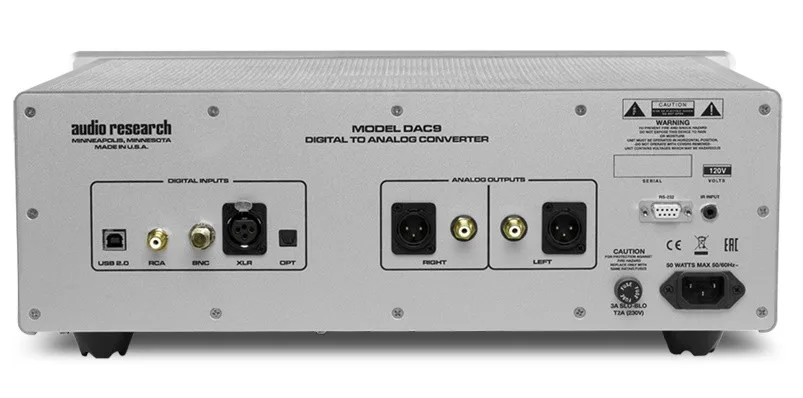
On the connectivity side, the DAC9 offers five digital inputs: USB, RCA, BNC, AES/EBU and Toslink, allowing several sources to be connected simultaneously without the need for external switchers. Outputs are available in both balanced and unbalanced versions, which facilitates integration into configurations using either XLR or RCA cables.
This converter is aimed at analogue sound enthusiasts seeking a DAC capable of reproducing the warmth and grain characteristic of tube stages, while benefiting from current digital standards up to high resolution and DSD. It naturally finds its place in a high-end system where the digital source must rival a tube stage in musicality.
Technical specifications
| Connectivity | USB, RCA, BNC, AES/EBU, Toslink (digital inputs); balanced and unbalanced outputs |
| Decoding | Red Book CD up to 384 kHz, native DSD |
| Digital architecture | Quad DAC |
| Analogue stage | Pair of 6H30 tubes |
What to check before buying used
The pair of 6H30 tubes in the output stage deserves testing over an extended listening session to check for microphonics, excessive noise or premature wear, and their installation date is rarely known on a used unit. The digital inputs (USB, BNC, AES/EBU) and balanced outputs should be checked one by one, as an oxidised connector or a worn internal relay could cut out a channel or generate interference. It is also worth checking that the digital filters and locking on native DSD streams work without dropouts, a sign of ageing processing electronics.
Looking for this reference: DAC 9 ?
Tell us what you are looking for: our merchants are notified, and one of them may have it in stock.