
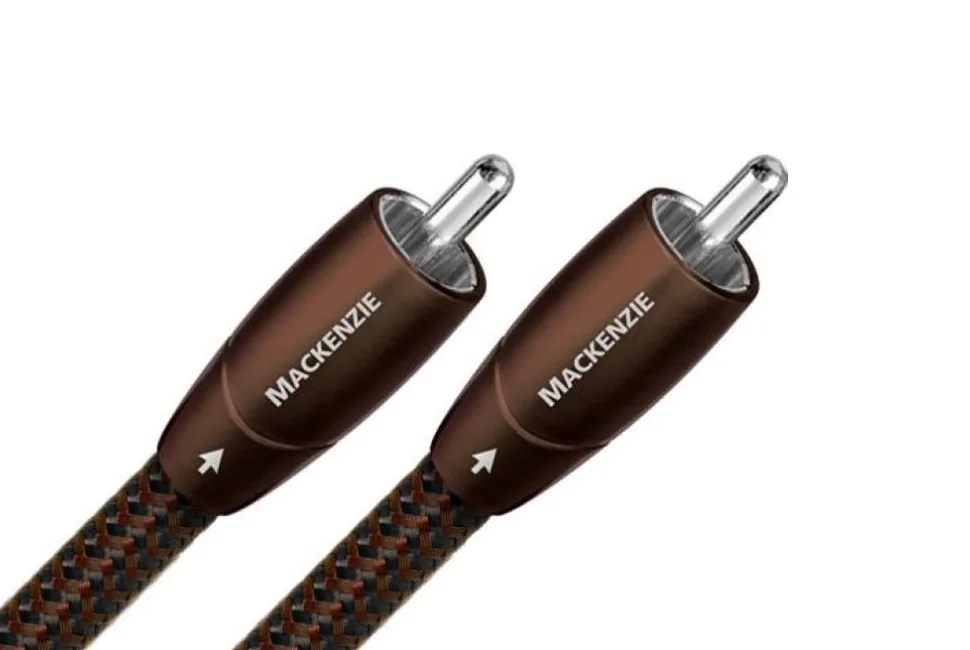

AudioQuest Mackenzie
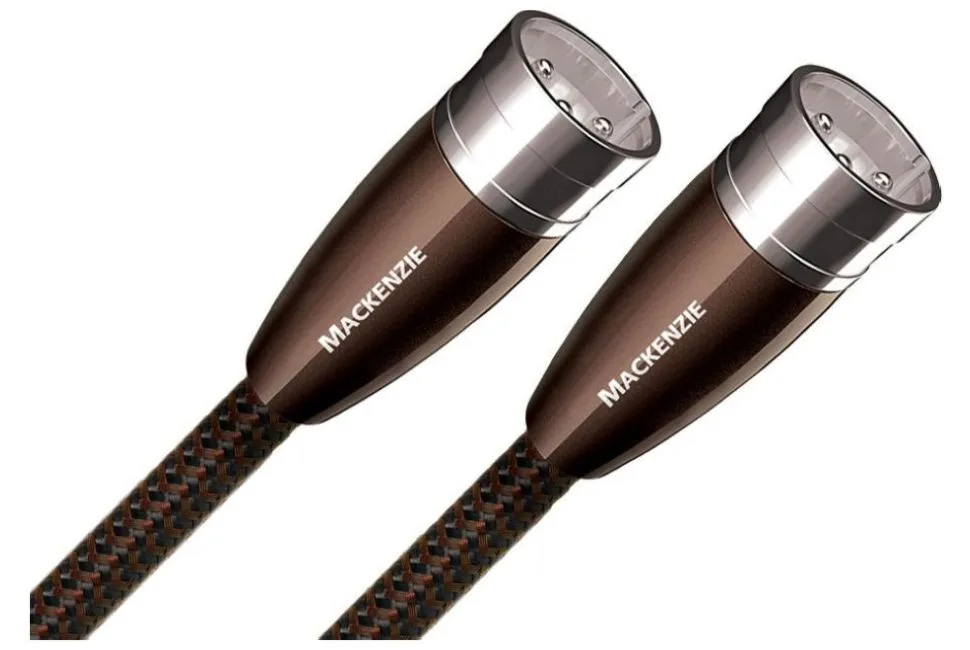
AudioQuest Mackenzie XLR interconnect cable with solid PSC+ conductors and RFI filtering, for a balanced connection between components in a hi-fi system.
Description
The Mackenzie is an interconnect cable from AudioQuest, designed to link two components in a hi-fi system via a balanced connection using XLR connectors. It is installed between a source and a preamplifier, or between a preamplifier and an amplifier, in a configuration where balanced connectivity is preferred to limit interference over long cable runs.
The cable is built on solid Solid Perfect Surface Copper+ (PSC+) conductors, a material engineered to limit surface irregularities that can affect the audio signal. The dielectric, a nitrogen-injected polyethylene foam, surrounds these conductors and helps preserve signal integrity by reducing losses related to the insulator. The cable's structure is balanced, in keeping with its use in an XLR connection.
To limit radio-frequency interference, AudioQuest has incorporated its proprietary NDS (Noise-Dissipation System) technology, made up of three layers of carbon. This RFI filtering is designed to dissipate stray noise picked up by the cable before it reaches the wanted signal. The connectors, made of pure red copper plated with silver, are cold-welded, an assembly method that avoids the use of solder at the conductor-connector junction.
This cable is aimed at hi-fi enthusiasts with equipment fitted with XLR inputs and outputs, looking for a carefully engineered balanced connection between the links of their system, particularly on systems where cable length or the electrical environment calls for enhanced shielding against interference.
Technical specifications
| Conductors | Solid Perfect Surface Copper+ (PSC+) solid copper |
| Dielectric | Nitrogen-injected polyethylene foam |
| RFI filtering | NDS (Noise-Dissipation System) technology, 3 layers of carbon |
| Structure | Balanced |
| Connectors | Pure red copper plated with silver, cold-welded |
What to check before buying used
The cold-welded XLR connectors are worth checking carefully: a poor contact here can cause stray noise or a channel dropout. It is also worth checking the condition of the sheath and the polyethylene dielectric, which can crack or become compressed at bend points after several years of use. A listening test on both channels, while gently moving the XLR plugs, will help detect any micro-dropout or internal loose contact.
Looking for this reference: Mackenzie ?
Tell us what you are looking for: our merchants are notified, and one of them may have it in stock.