
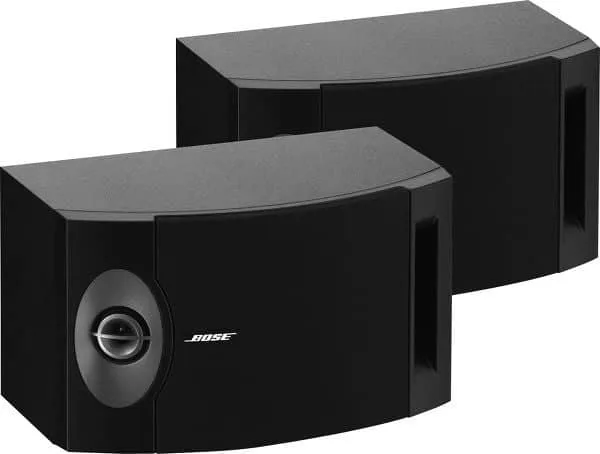
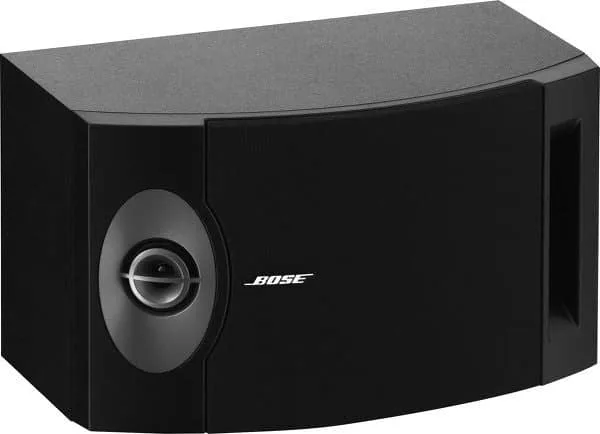

Bose 201 (the pair)
Pair of Bose 201 bookshelf speakers, 2-way bass-reflex design with Direct/Reflecting technology, designed to provide wide and even sound distribution throughout the room.
Comparison with the observed price of the same product new; this is not a reduction on a previous price.
Description
The Bose 201 form a pair of 2-way bass-reflex bookshelf speakers. They draw on Bose's proprietary Direct/Reflecting technology, which combines direct and reflected sound emission to achieve a broad soundstage rather than listening strictly focused on the listener.
Each speaker pairs a 16.5 cm woofer/midrange driver with a 5 cm Stereo Targeting tweeter. This pairing of transducers, combined with the tuned-port bass-reflex loading, aims to deliver present bass despite the cabinet's compact size. Stereo Everywhere technology complements the Direct/Reflecting design by seeking to even out stereo distribution throughout the room, rather than within a single, centred listening area.
With an impedance of 4 to 8 Ω and a recommended power of between 10 and 120 W per channel, these speakers accommodate a wide range of amplifiers, from modest setups to more powerful installations. The cabinet, made of polymer with a vinyl veneer, measures 20 × 35 × 22 cm.
This model suits those seeking a diffuse, easy-going stereo listening experience rather than a strictly analytical one, for a living room, office or any space where you want to enjoy sound without being confined to a precise listening spot.
Technical specifications
| Type | 2-way bookshelf speakers, bass-reflex (pair) |
| Drivers | 16.5 cm bass-mid + 5 cm tweeter (Stereo Targeting) |
| Technology | Direct/Reflecting, Stereo Everywhere |
| Impedance | 4-8 Ω |
| Recommended power | 10 – 120 W per channel |
| Dimensions (H × W × D) | 20 × 35 × 22 cm |
What to check before buying used
The woofer/midrange driver's surrounds deserve close inspection: hardened, cracked or sagging foam or rubber results in soft bass and distortion at high volume. Also check the bass-reflex port, which must be free of deformation or blockage to maintain the sound intended by the tuned loading. Finally, inspect the cabinet's vinyl veneer at the corners and faces, the areas most prone to chips, lifting or wear marks after several decades.
Looking for a specific product?
Tell us what you are looking for: our merchants are notified, and one of them may have it in stock.