



Chord Qutest
Chord Qutest standalone DAC with Hugo 2 architecture, featuring USB, optical and coaxial inputs and a variable-voltage RCA output, to upgrade an existing hi-fi system.
Description
The Qutest is a standalone digital-to-analogue converter from Chord Electronics, designed to succeed the 2Qute. Unlike other models in the range, it includes neither headphone amplification nor a battery: its sole function is to convert a digital signal into a high-quality analogue signal, for use with an amplifier, preamplifier or integrated headphone amplifier already in place.
Its conversion architecture is derived from the Hugo 2, driven by a Xilinx Artix 7 (XC7A15T) FPGA processor combined with advanced digital volume control. This design allows it to handle PCM up to 768 kHz and DSD up to 22.4 MHz. The measured performance reflects this level of care: total harmonic distortion below 0.0001% at 1 kHz at 3 Vrms, a signal-to-noise ratio of 117 dB and channel separation of 138 dB, values that translate into a signal reproduced with very low background noise and good independence between the left and right channels.
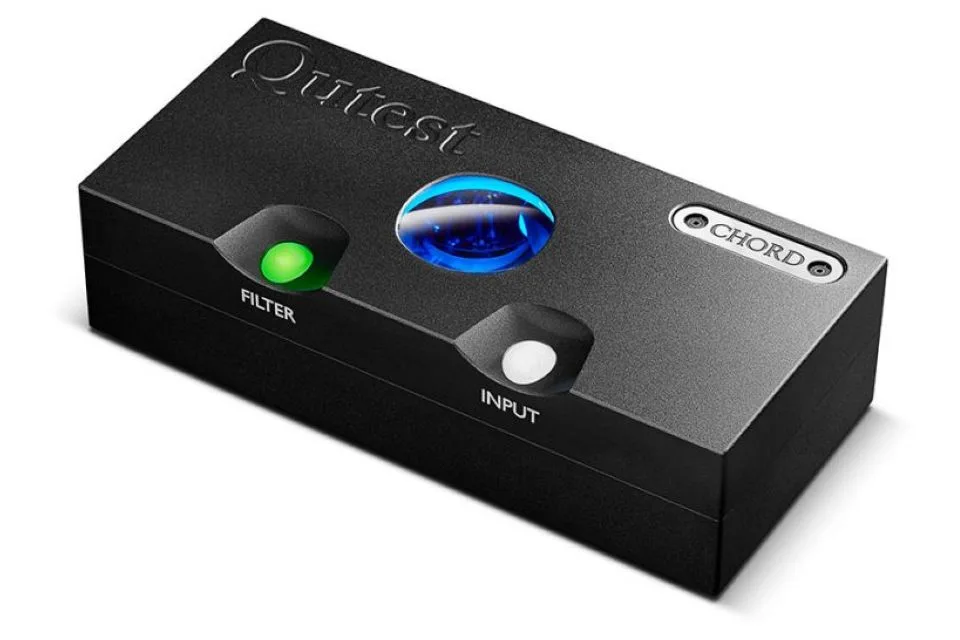
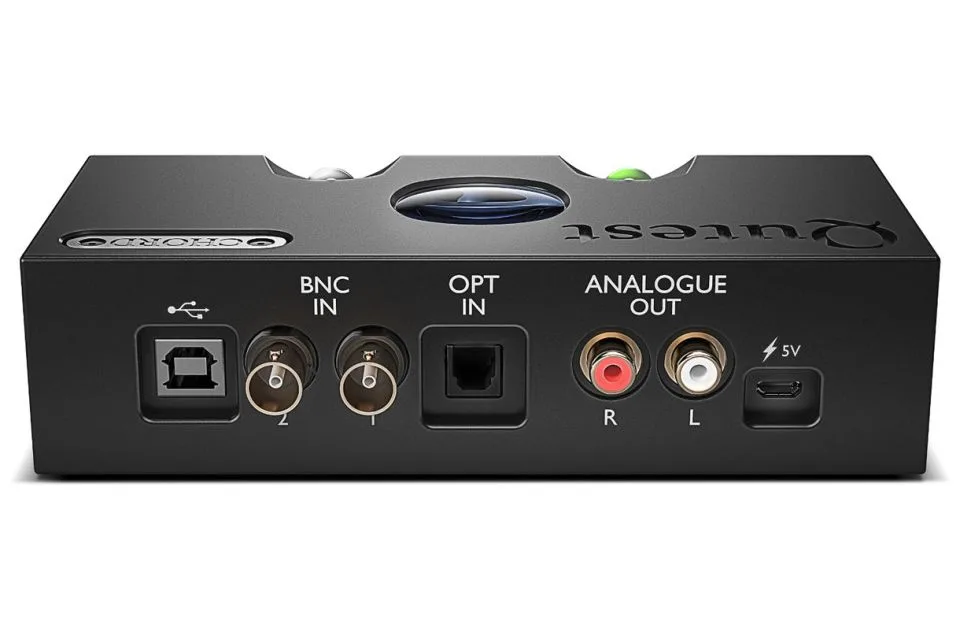
In terms of connectivity, the Qutest features a high-definition asynchronous USB-B input, a TOSLink optical input and two BNC coaxial inputs, all galvanically isolated to limit electrical interference between connected devices. The stereo RCA analogue output offers a user-selectable voltage of 1, 2 or 3 V RMS, making it easier to match with different amplifiers or preamplifiers. Two spheres on the front panel are used to select the active input and apply the frequency-shaping filters inherited from the Hugo 2.
The chassis, entirely new compared with the 2Qute, is machined from a solid billet of aircraft-grade aluminium. The circuit board sits within a shallow cavity in the casing, giving it greater mechanical protection and enhanced isolation from external vibrations.
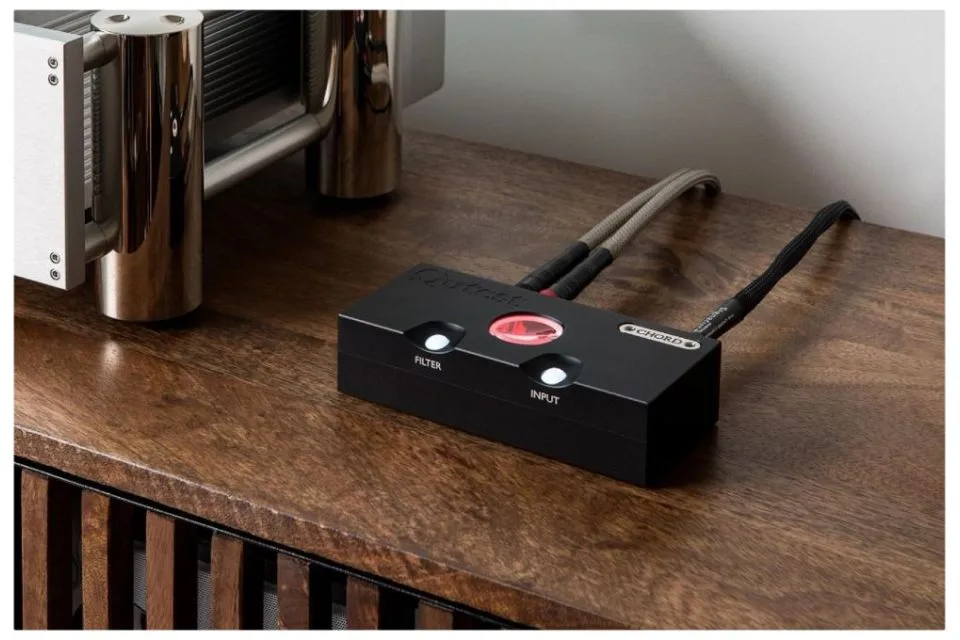
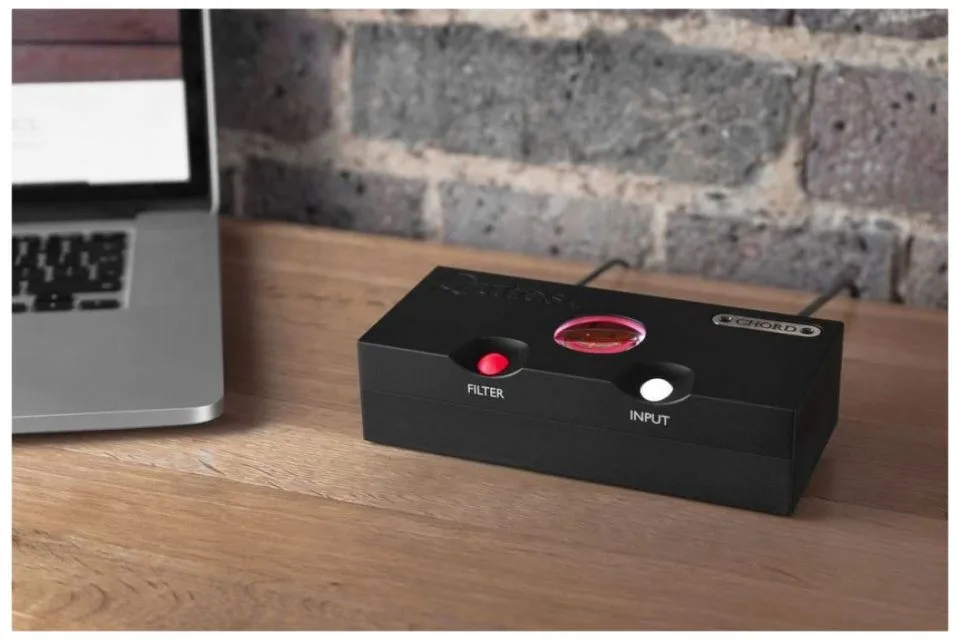
This DAC is aimed at those wishing to modernise an existing hi-fi system or replace the ageing digital output of a player, computer or CD transport, without going through an additional preamplifier or headphone amplifier. Its varied digital inputs and adjustable-voltage output make it adaptable to a wide range of setups, from a desktop system to a more ambitious living-room installation.
Technical specifications
| THD | < 0.0001% at 1 kHz 3 Vrms |
| Signal to noise ratio | 117 dB |
| Channel separation | 138 dB |
| Dimensions (H × W × D) | 41 x 160 x 72 mm |
| Weight | 1.5 kg |
| PCM format supported | up to 768 kHz |
| DSD format supported | up to 22.4 MHz |
| Processor | Xilinx Artix 7 FPGA (XC7A15T) |
| Connections | 1x TOSLink optical input (24-bit/192 kHz), 2x BNC coaxial inputs (32-bit/384 kHz), 1x asynchronous HD USB input (32-bit/768 kHz and DSD512), 1x micro USB input (power), 1x stereo RCA output |
What to check before buying used
The casing houses an FPGA and galvanically isolated electronics with no wear parts directly at risk, but a systematic check of all three digital inputs (USB, BNC coaxial, optical) is required to rule out any faulty clock communication with the source. The RCA output also warrants close inspection of the connectors, the only exposed mechanical contact point subject to oxidation or looseness after years of repeated connections.
Looking for this reference: Qutest ?
Tell us what you are looking for: our merchants are notified, and one of them may have it in stock.