




Elipson P1F
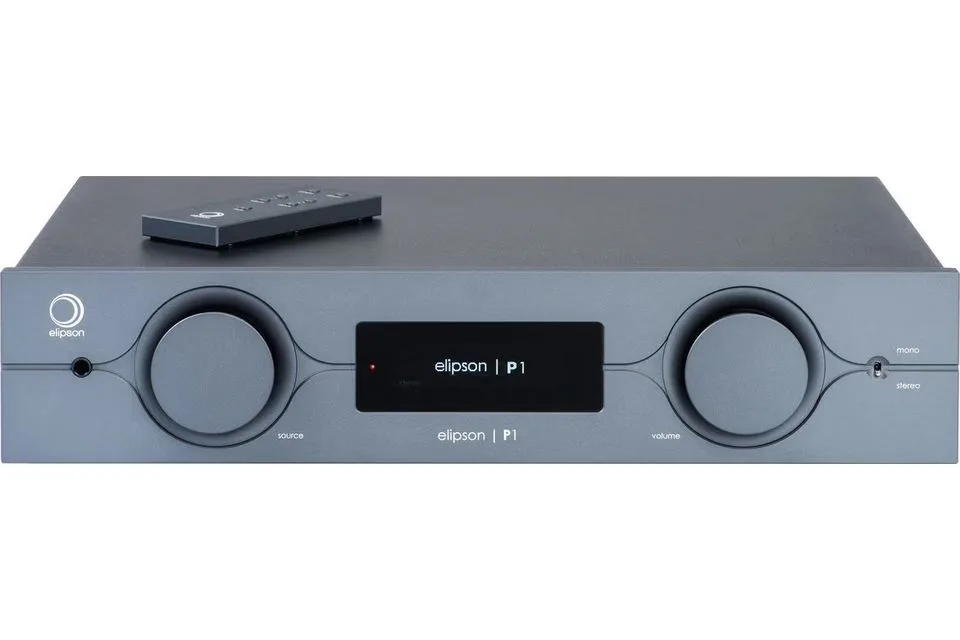
Elipson P1F stereo preamplifier, supplied with its MM/MC phono modules and digital converter: a single control centre for a system combining vinyl, analogue sources and digital files.
Description
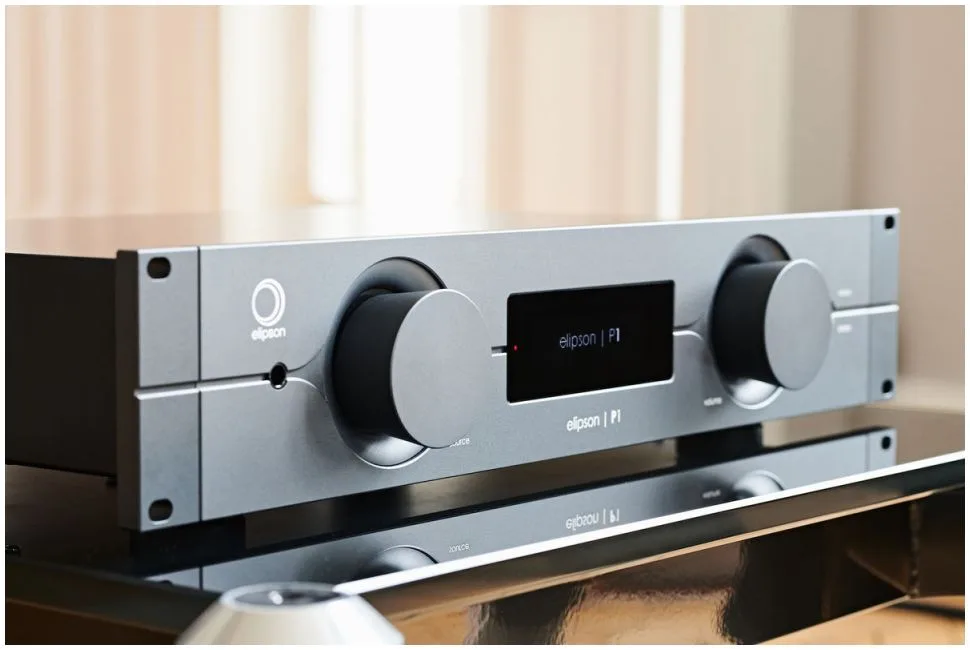
The P1F is the most complete version of the Elipson P1 preamplifier: the MPH II phono card and the MDAC I digital conversion card are already installed in its expansion slots. The unit therefore handles on its own the switching and preamplification of line sources, a turntable and digital sources, before passing the signal on to one or more power amplifiers.
The line stage works in both unbalanced and balanced modes, with an output gain of 12 V on RCA and 18 V on XLR, leaving a comfortable margin to drive amplifiers with low sensitivity or installed at a distance. The frequency response runs from 2 Hz to 120 kHz (+/- 3 dB), distortion stays below 0.001%, the signal-to-noise ratio exceeds 102 dB and crosstalk drops to -100 dB: figures that point to a discreet signature, with no added colouration or blurring between channels. The 500 kOhm input impedance also avoids loading the sources.
The phono stage switches between moving magnet and moving coil: 41 dB of gain and 47 kOhms of impedance for an MM cartridge with a sensitivity of 7.5 mV, 61 dB and 100 ohms for an MC, with respective signal-to-noise ratios of 76 dB and 83 dB and a bandwidth of 25 Hz to 80 kHz. The digital module, for its part, accepts streams of up to 32 bits and 384 kHz. The internal software is updated via the USB port, allowing the unit to be upgraded without technical intervention.
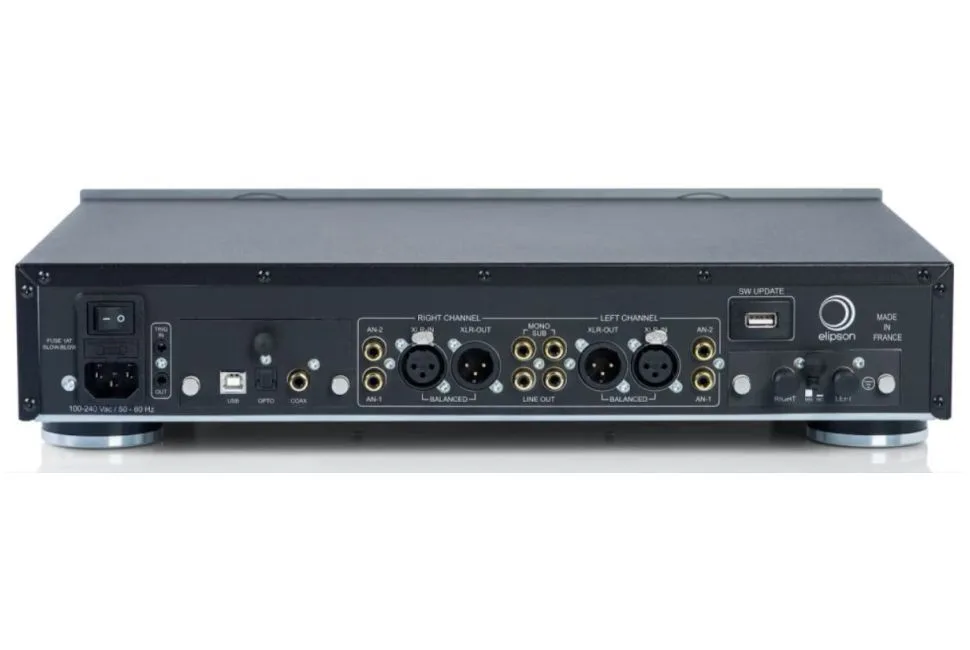
- Inputs: 2 unbalanced RCA, 2 balanced XLR, 1 RCA phono MM/MC, USB, coaxial and optical
- Outputs: unbalanced RCA, balanced XLR, subwoofer, 6.35 mm jack headphones
- Dimensions 430 x 95 x 315 mm for 5.3 kg
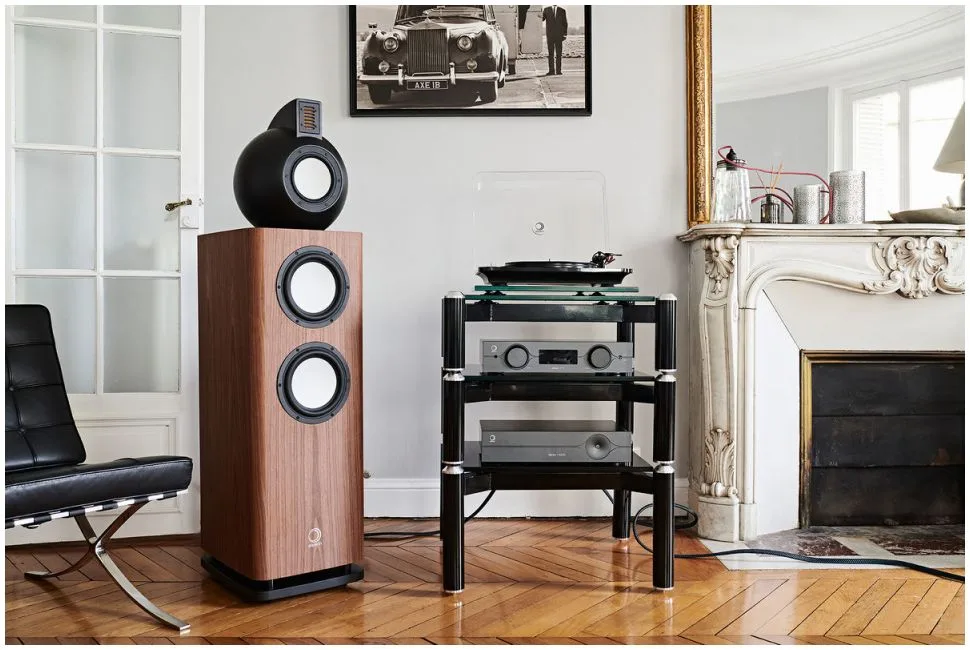
This P1F is aimed at the listener who already owns power amplifiers or an amplifier with a direct input and wants a single point of convergence for their vinyl, analogue sources and files. The dedicated subwoofer output will appeal to systems with a complementary subwoofer, the 6.35 mm headphones output to late-night listening, and the dual RCA/XLR output to those who need to cover long runs between the preamplifier and the amplifiers. A unit designed for a separates system, built to evolve, rather than for a compact system.
Technical specifications
| RCA output gain | 12 V |
| XLR output gain | 18 V |
| Frequency response | 2 Hz to 120 kHz (+/- 3 dB) |
| Distortion | < 0.001% |
| Signal to noise ratio | > 102 dB |
| Impedance | 500 kOhms |
| Crosstalk | - 100 dB |
| MM input gain | 41 dB |
| MC input gain | 61 dB |
| MM input impedance | 47 kOhms |
| MC input impedance | 100 ohms |
| MM signal to noise ratio | 76 dB |
| MC signal to noise ratio | 83 dB |
| MM input sensitivity | 7.5 mV |
| MC input sensitivity | 750 mV |
| Phono input bandwidth | 25 Hz to 80 kHz |
| Digital resolution | up to 32-bit / 384 kHz |
| Connections | 2 x unbalanced RCA inputs, 2 x balanced XLR inputs, 1 x RCA phono MM/MC input, 1 x USB input, 1 x coaxial input, 1 x optical input, 1 x unbalanced RCA output, 1 x balanced XLR output, 1 x subwoofer output, 1 x 6.35 mm jack headphones output |
| Dimensions (W × H × D) | 430 x 95 x 315 mm |
| Weight | 5.3 kg |
What to check before buying used
Start by checking which cards are actually fitted in the slots: the P1F version should include the MPH II phono module and the MDAC I digital module, and their absence completely changes the nature of the unit. On a preamplifier of this type, listen to each input one after another to detect a sluggish switching relay or a weaker channel, and test the phono stage on both MM and MC to spot any abnormal hum, as this stage is the most prone to drift. The front display and remote control deserve a full test, including source selection and volume adjustment. Finally, ask for the internal software version: updates are done via USB, but the port and the procedure still need to work.
Looking for this reference: P1F ?
Tell us what you are looking for: our merchants are notified, and one of them may have it in stock.