

Ever solo DAC-Z10
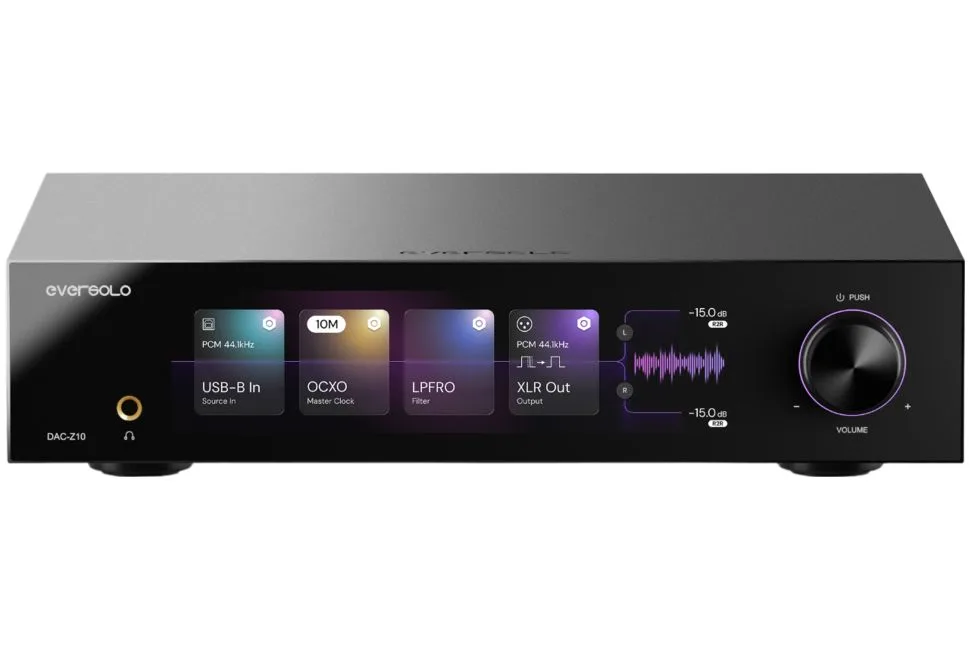
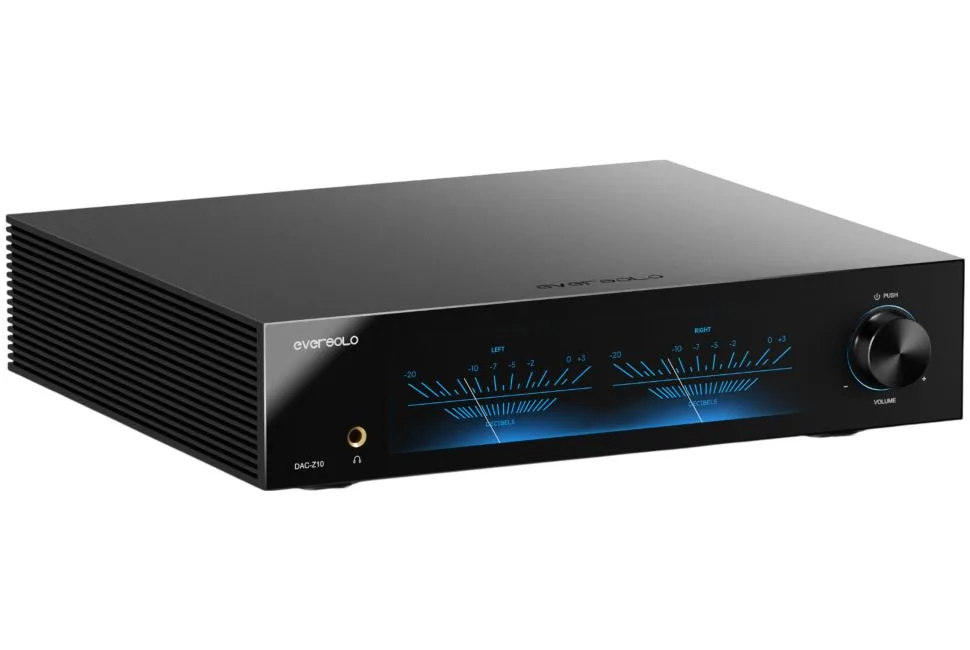
EverSolo dual-mono DAC with dual-stage AK4191/AK4499, featuring an 8.8-inch IPS screen, an active preamplifier and a headphone output, for demanding hi-fi systems.
Description
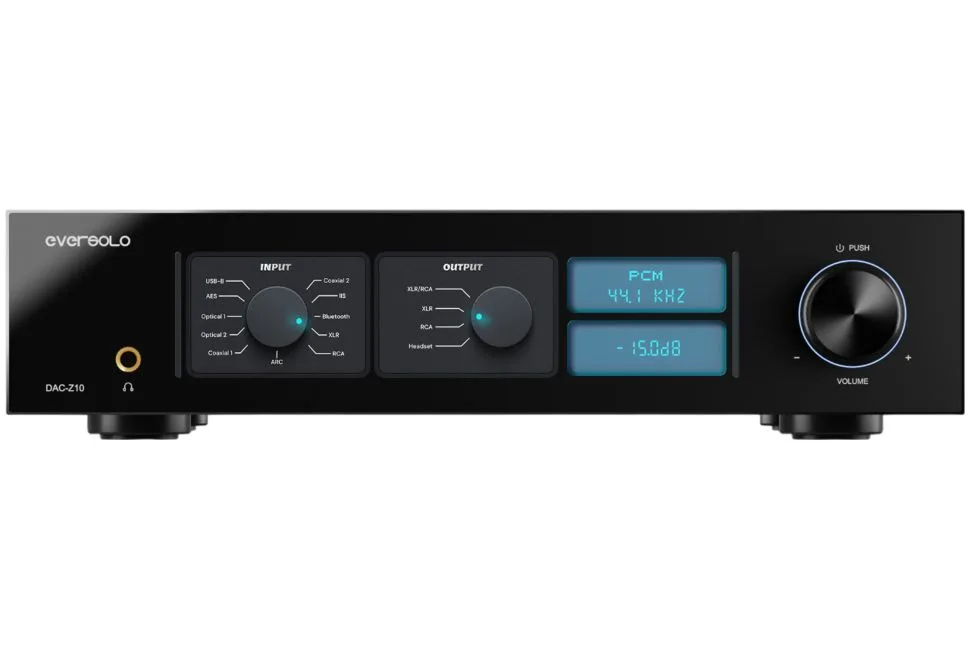
The EverSolo DAC-Z10 is a digital-to-analogue converter that also incorporates a preamplifier section and a headphone output. It is designed to occupy a central place in a hi-fi system, handling the conversion of digital sources and directly driving headphones or a downstream power amplifier.
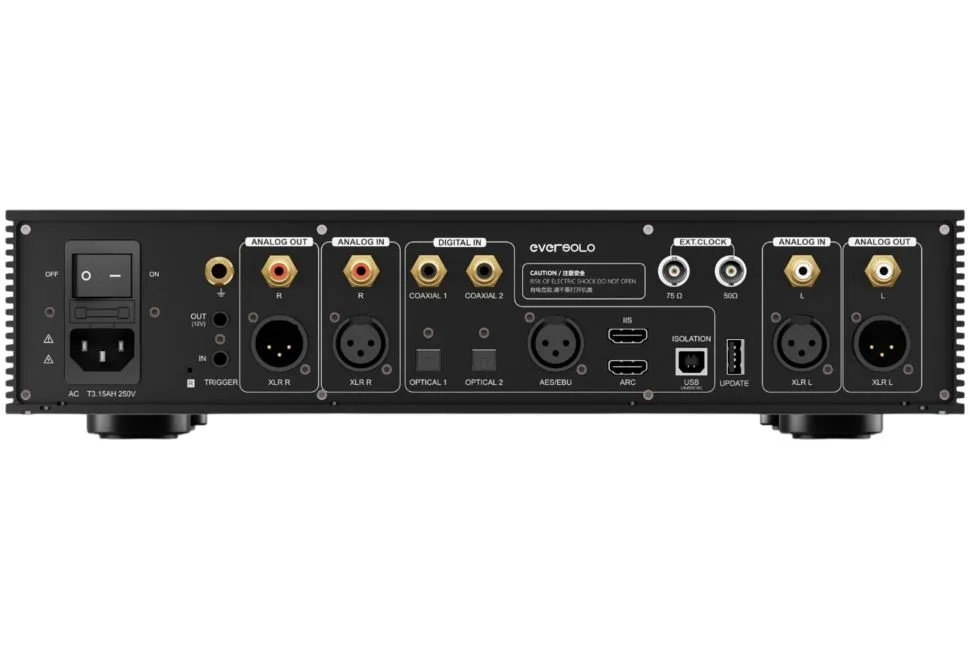
Its architecture is based on a dual-mono design: each channel, left and right, has its own pair of AK4191 chips paired with an AK4499, allowing complete separation of processing for the two channels. The unit features a power supply made up of three separate ultra-low-noise linear blocks, dedicated separately to the digital and analogue stages. Audio processing relies on a multi-core USB processor and an OPA1612 chip at the output. On the connectivity side, the DAC-Z10 covers a broad range: USB-B input compatible with DSD512/PCM 768 kHz 32-bit, IIS input with eight mode configurations, AES/EBU, two optical inputs and two coaxial inputs up to PCM 192 kHz/24-bit and DSD64 DoP, an ARC input, as well as a Bluetooth input via a Qualcomm QCC5125 module compatible with SBC/AAC. An external clock input (10M/25M, 50Ω or 75Ω) also allows it to be synchronised with a studio system.
On the output side, the unit offers a balanced XLR and unbalanced RCA pre-out, as well as a headphone output in 6.35 mm jack format, with a recommended impedance range of 16 to 300Ω depending on the gain setting (low for 16-32Ω, high for 32-300Ω).
This DAC is aimed at a user wishing to centralise several digital and analogue sources around a single unit capable of acting as a converter, preamplifier and headphone amplifier all at once, without any additional stage. Its extensive connectivity makes it a relevant choice for integrating a computer, a TV via ARC, a network player or a Bluetooth source, as well as studio equipment via the external clock input.
Technical specifications
| Screen | 8.8" IPS |
| Chassis material | Aluminium alloy |
| Main processor | DCP8568 |
| DAC | Left channel: AK4191 + AK4499 / Right channel: AK4191 + AK4499 |
| Audio processor | Multi-core USB audio processor |
| OPA chip | OPA1612 |
| Power supply | Triple ultra-low-noise linear power supply |
| Bluetooth audio input | Qualcomm QCC5125 Bluetooth module, BT5.0, SBC/AAC protocols |
| USB B audio input | Compatible with Windows 10 and above, macOS, Android, iOS; up to Stereo DSD512 / PCM 768kHz 32Bit |
| IIS input | 8 mode configurations, up to Stereo DSD512 / PCM 768kHz 32Bit |
| AES/EBU input | Up to Stereo PCM 192kHz/24Bit / DSD64 DoP |
| Optical audio inputs | ×2, up to Stereo PCM 192kHz/24Bit / DSD64 DoP |
| Coaxial audio inputs | ×2, up to Stereo PCM 192kHz/24Bit / DSD64 DoP |
| ARC input | Up to Stereo PCM 192kHz/24Bit |
| Analogue audio inputs | XLR (balanced), RCA |
| Analogue audio outputs | Pre-out: XLR (balanced), RCA; headphone output: unbalanced 6.35mm jack |
| External clock input | 10M/25M, 50Ω or 75Ω impedance |
| Recommended headphone impedance | 16–300Ω (Low gain: 16–32Ω / High gain: 32–300Ω) |
| Dimensions (H × W × D) | 88mm × 365mm × 310mm |
| Weight | approx. 6 kg |
What to check before buying used
Check that the three linear power supply blocks do not produce any hum or residual hiss in the headphones, which could indicate ageing capacitors. Test each digital input separately, USB-B, IIS, AES/EBU, optical and coaxial, as an oxidised connector or an internal ribbon cable that was not properly reconnected after a previous disassembly can disable one port without affecting the others. Also check the effective support for DSD512 via USB, as some units have undergone incomplete firmware updates that limit high bitrates. Finally, make sure the volume knob and the input switching relays do not produce any crackling or level jumps during use.
Looking for this reference: DAC-Z10 ?
Tell us what you are looking for: our merchants are notified, and one of them may have it in stock.