
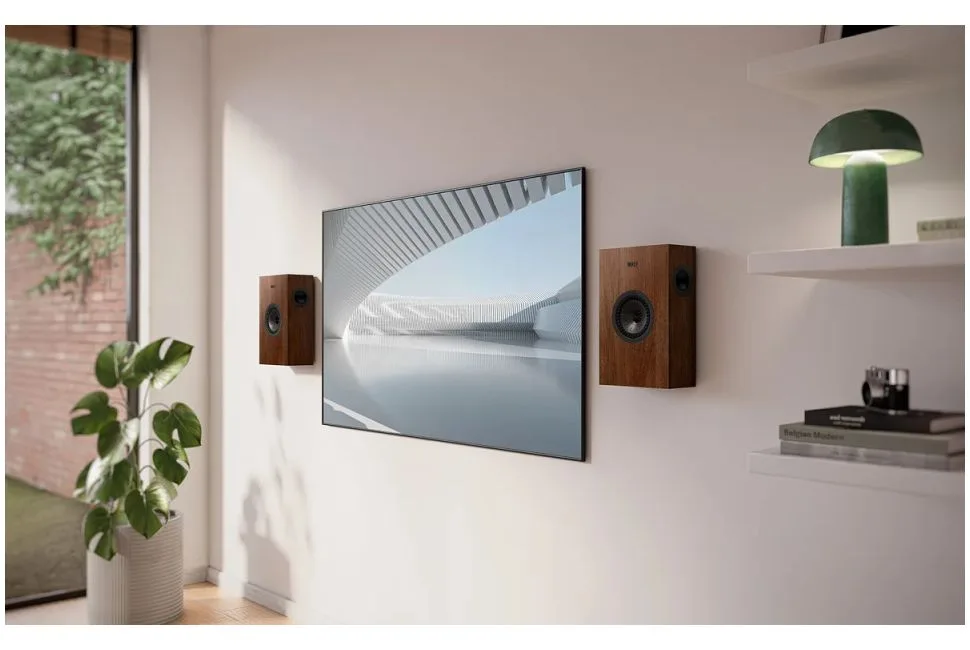

KEF Q4 Meta
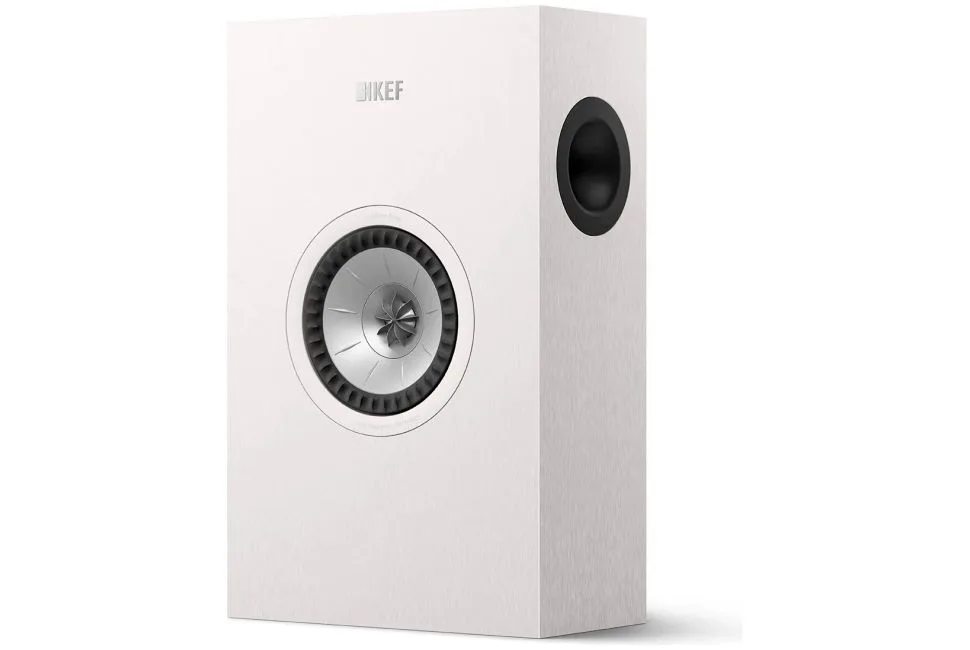
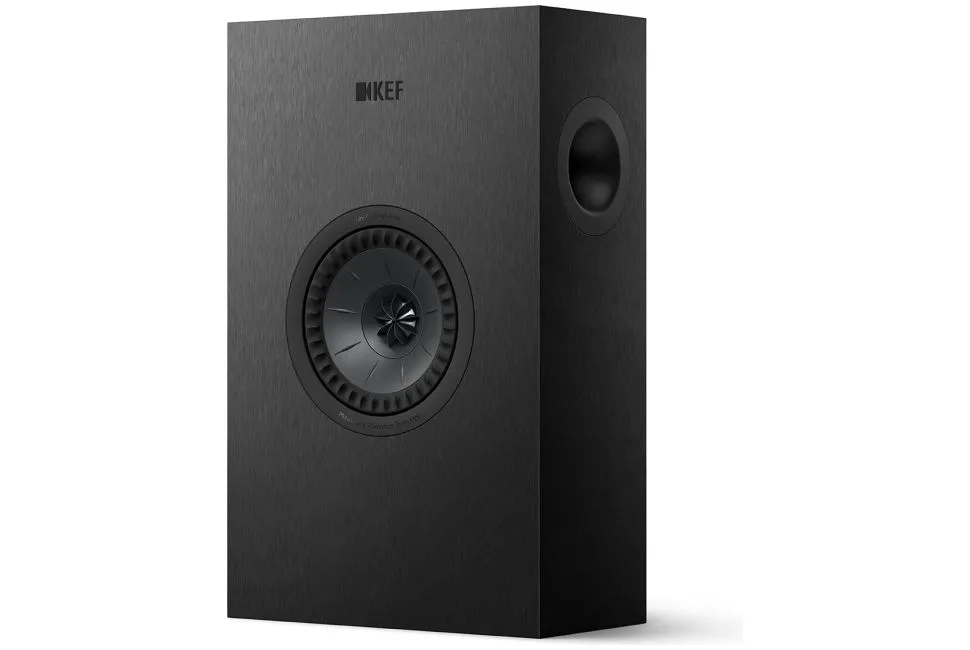
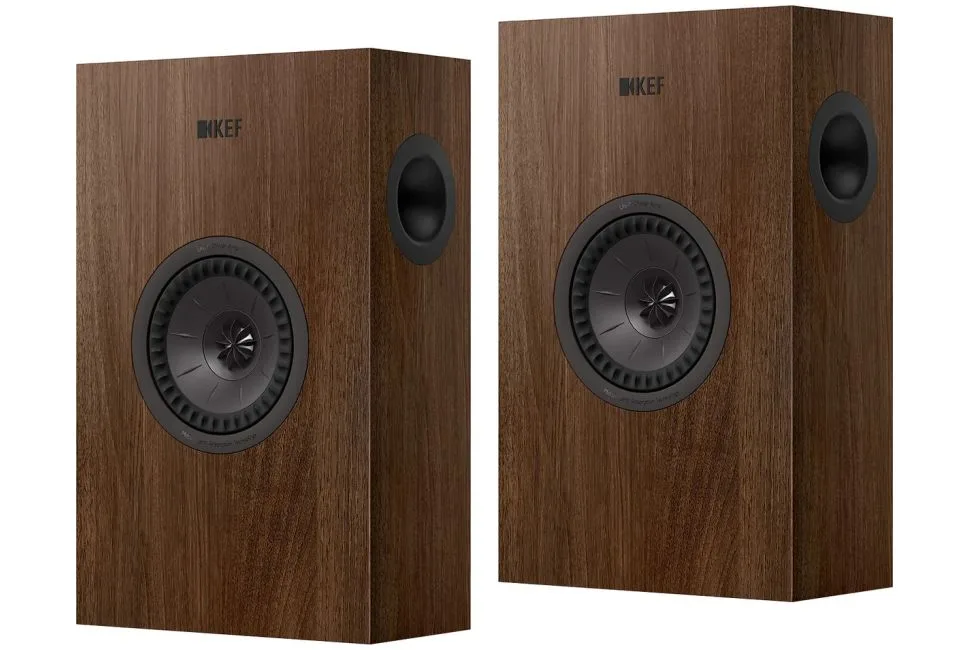
KEF Q4 Meta on-wall speaker with Uni-Q coaxial driver, designed for centre, left/right or surround use in a slim format.
Description
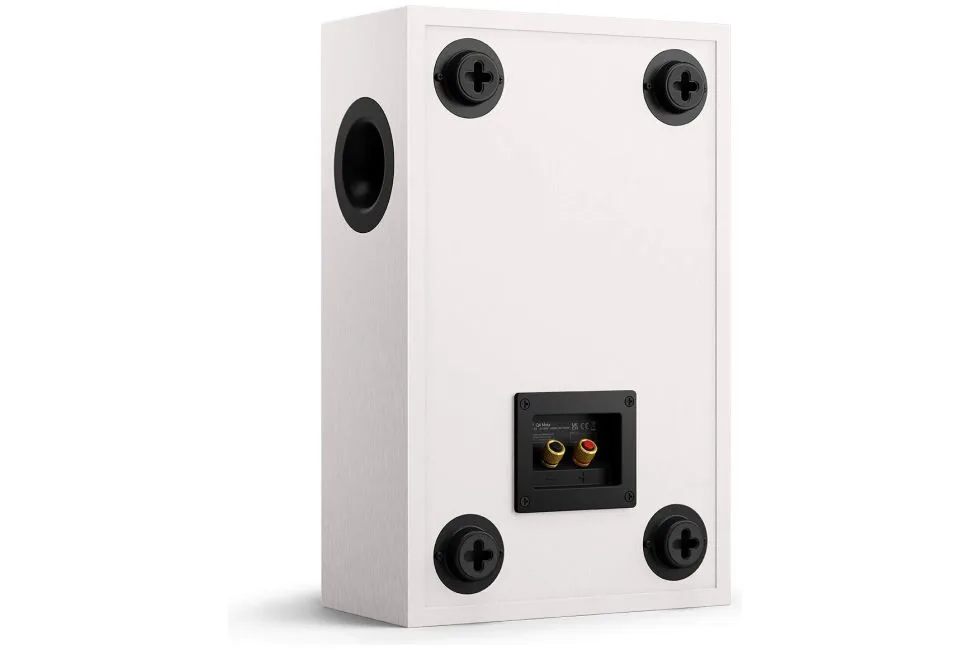
The KEF Q4 Meta is a 2-way on-wall speaker designed to blend discreetly into a home cinema or hi-fi installation. Its slim profile allows it to serve as a centre, left, right (LCR) or surround channel, depending on the configuration's requirements, while limiting floor footprint.
At the heart of this speaker is a 12th generation Uni-Q coaxial driver, combining a 2.5 cm vented dome tweeter and a 13 cm midrange in a single point of emission. This arrangement, complemented by MAT technology integrated into the waveguide, aims to homogenise sound dispersion and widen the comfortable listening area. The bass-reflex loading via side-firing port and Shadow Flare technology help extend dispersion without requiring a large cabinet volume.
In terms of performance, the Q4 Meta offers a sensitivity of 86 dB (2.83 V/1m) and a maximum sound level of 108 dB/1W/1m, with a stated frequency response of 65 Hz to 25 kHz (-3 dB). The 4 ohm input impedance (3.2 ohms minimum) and recommended power range of 10 to 150 W point towards a home cinema amplifier or amp/headphone amp capable of delivering sufficient power without straining.
This model is aimed at home cinema or multichannel system enthusiasts seeking a neat on-wall integration, without sacrificing sound coherence between channels. Its compact format and placement versatility also make it an option for complementing a pair of main speakers in an LCR or surround configuration.
Technical specifications
| Power | 10 to 150 W |
| Sensitivity | 86 dB (2.83 V/1m) |
| Maximum sound level | 108 dB/1W/1m |
| Frequency response | 65 Hz to 25 kHz (-3 dB) |
| Crossover frequency | 1.8 kHz |
| Impedance | 4 ohms (3.2 ohms min) |
| Construction | 2-way |
| Dimensions (W × H × D) | 250 x 400 x 142 mm |
| Weight | 5.7 kg |
What to check before buying used
The Uni-Q coaxial driver deserves careful inspection: impact marks on the tweeter dome or deformation of the midrange indicate a unit that has been mishandled. Also check the side-firing bass-reflex port, which can crack, as well as the condition of the cabinet finish and corners, which are prone to chipping during wall mounting. A test under load confirms the absence of crackling or distortion at low volume, which would indicate a fatigued suspension.
Looking for this reference: Q4 Meta ?
Tell us what you are looking for: our merchants are notified, and one of them may have it in stock.