
Lyngdorf BW-3
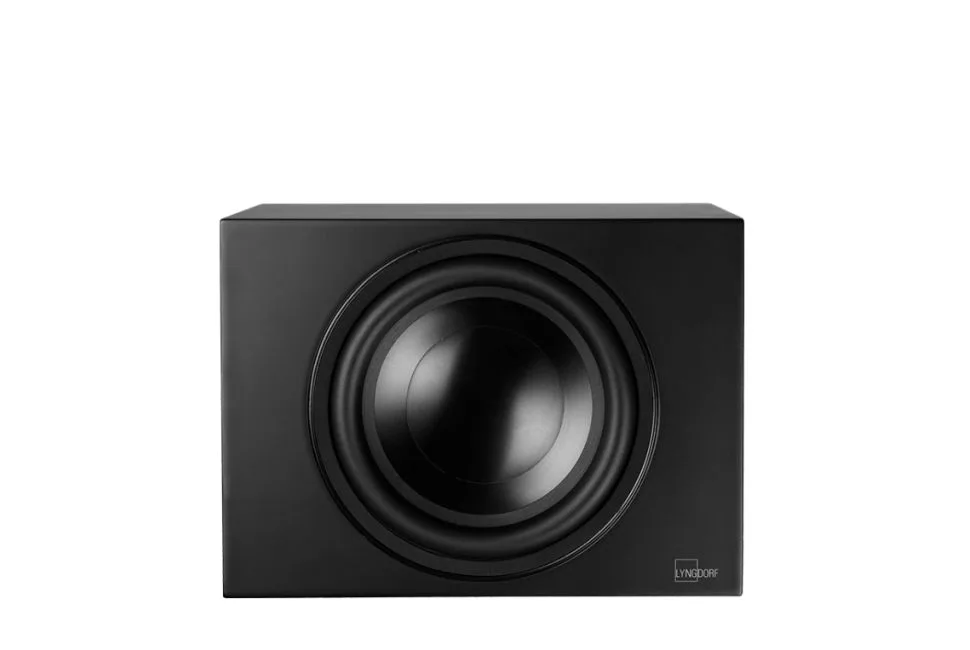
Compact Lyngdorf subwoofer with an unusually wide bandwidth, featuring a 400 W Class D amplifier and a long-throw 8-inch driver.
Description
The BW-3 is a subwoofer from Lyngdorf, designed to cover an unusually wide bandwidth for this type of speaker. Its frequency response can reach 800 Hz in bypass mode, compared with 200 Hz on the line input, allowing it to go beyond the classic bass-reinforcement role and actively contribute to low-midrange reproduction.
The internal amplifier is a Class D design from Lyngdorf, delivering 400 W RMS to drive a long-throw 8-inch driver fitted with a 38 mm voice coil and an aluminium diaphragm. This driver was specifically developed to operate within a reduced internal volume of 7 litres, which explains the compact size of the cabinet despite the stated power. Maximum sound pressure level reaches 99 dB RMS, and the THX method operates over a range of 40 to 80 Hz.
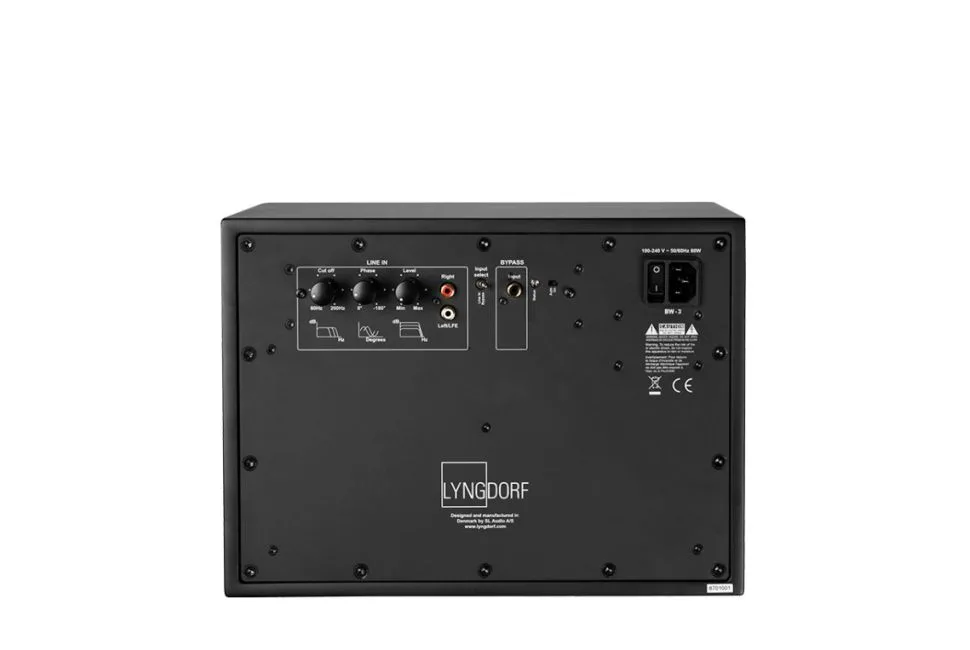
The amplifier module includes the usual controls for an active subwoofer: phase control, level adjustment, adjustable crossover frequency from 60 to 200 Hz, and a bypass switch allowing direct connection to Lyngdorf amplifier outputs or other audio equipment. This connection versatility makes it easy to integrate into either a stereo setup or a home cinema system.
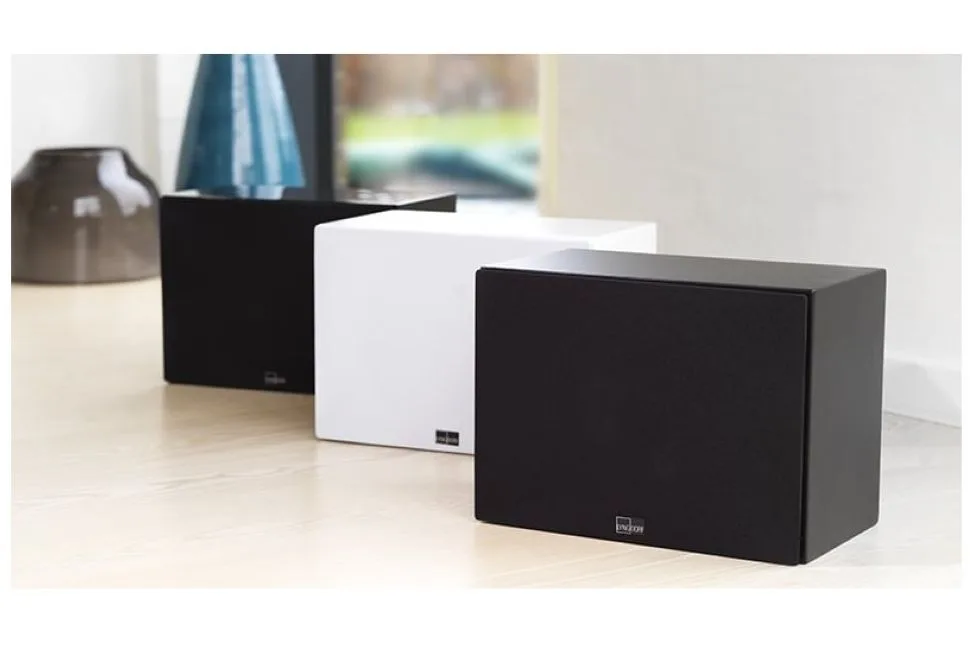
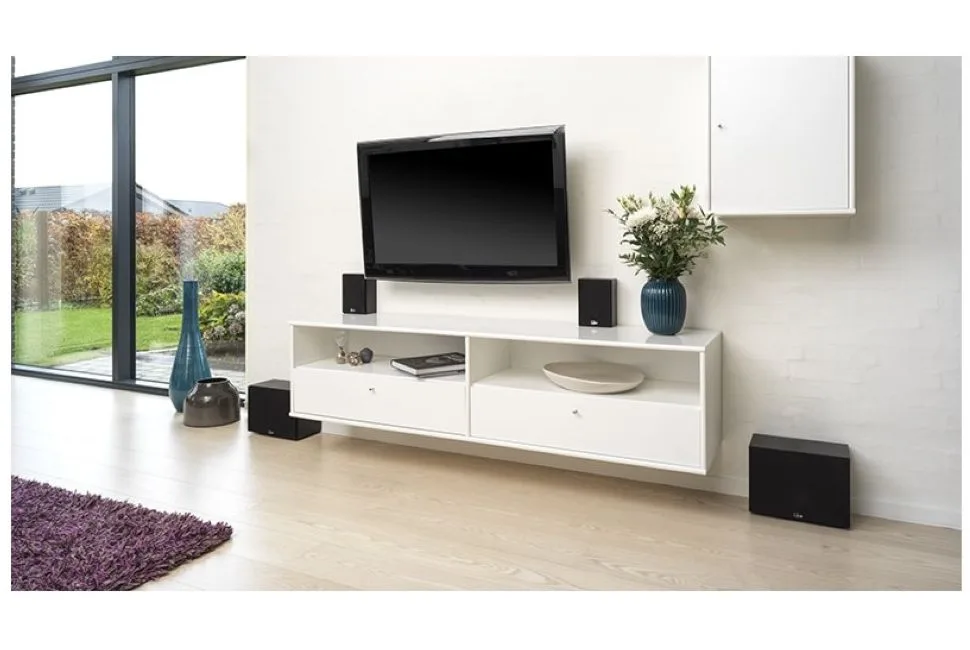
This subwoofer is aimed at users seeking a compact, discreet bass complement, capable of fitting into tight spaces thanks to its small dimensions (31.5 x 23 x 17.2 cm for 8.9 kg). Supplied without feet, it can be positioned upright or on its side depending on the room layout, making it a flexible solution for integration into any interior.
Technical specifications
| Amplifier | 400 W RMS, Class D |
| Frequency response | 27 to 800 Hz (bypass input) |
| Maximum sound pressure | 99 dB RMS |
| THX method | 40 to 80 Hz |
| Driver | 8" long-throw, Ø 38 mm voice coil, aluminium diaphragm |
| Dimensions (H × W × D) | 23 x 31.5 x 17.2 cm |
| Weight | 8.9 kg |
What to check before buying used
The 8-inch driver's aluminium diaphragm must be free of deformation or impact marks, as a centring fault can quickly result in an audible voice coil rub when the level is raised. Check that the amplifier module's controls (phase, level, 60-200 Hz crossover, bypass switch) work correctly without crackling or unexpected cutting out, a common symptom of tired Class D electronics. A high-volume test also confirms that the subwoofer maintains its sound pressure without distortion on deep bass.
Looking for this reference: BW-3 ?
Tell us what you are looking for: our merchants are notified, and one of them may have it in stock.