
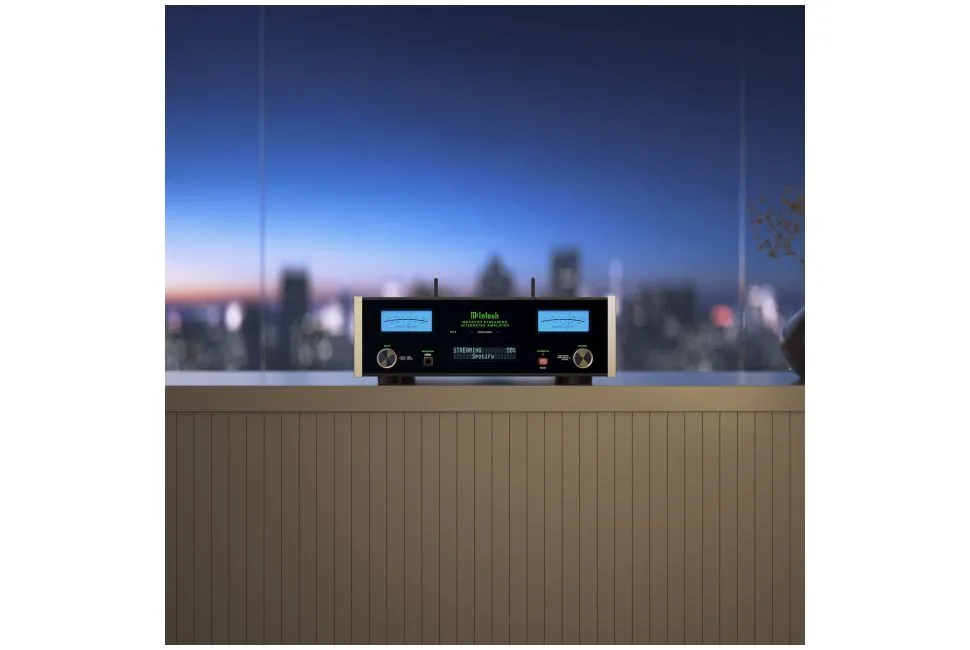

McIntosh MSA5500
McIntosh connected integrated amplifier combining multi-platform streaming, audiophile DAC and 100 W per channel, for a compact and versatile installation.
Description
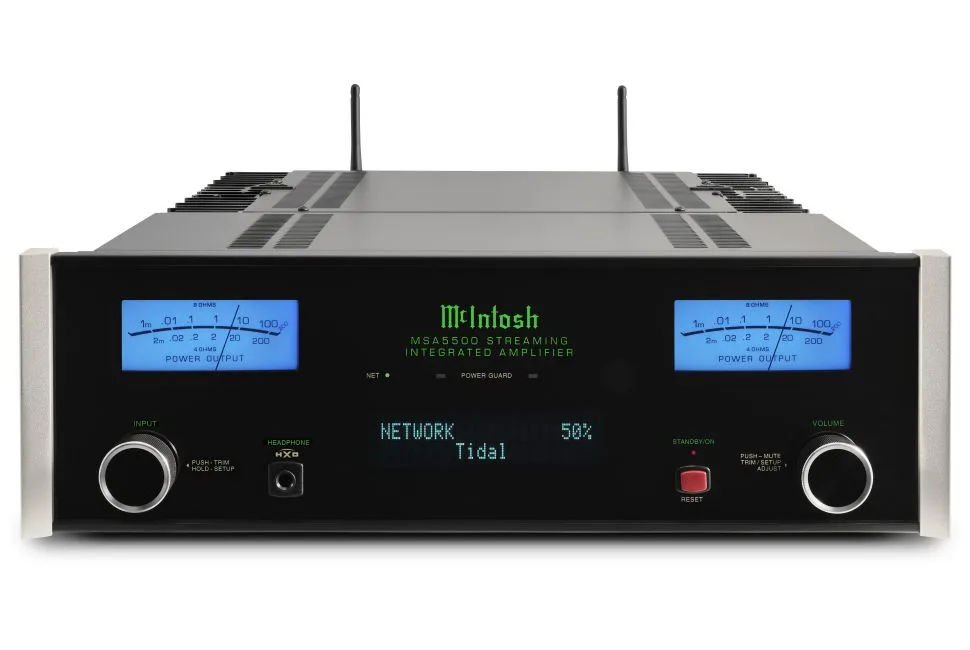
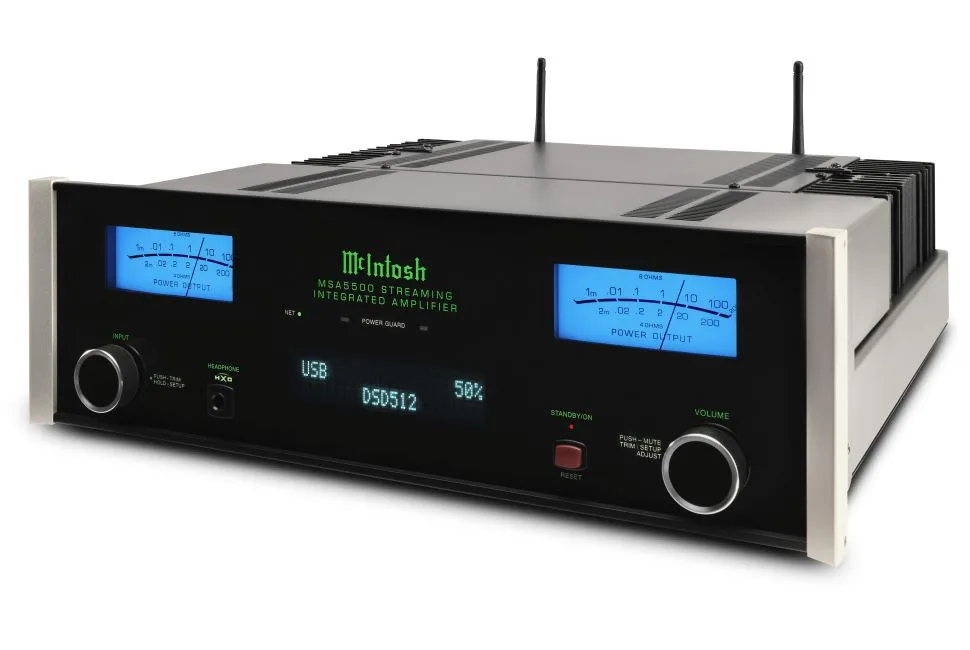
The McIntosh MSA5500 is a connected integrated amplifier that brings together a stereo power stage and a music streaming player in a compact chassis. Designed to serve as the centrepiece of a hi-fi installation, it lets you provide sound to a living room, office or second home without multiplying appliances: simply connect a pair of speakers to have a complete system.
Its output power reaches 100 W per channel into 8 ohms and 160 W into 4 ohms, over a range of 20 Hz to 20 kHz, with total harmonic distortion of 0.005% and a dynamic headroom of 1.8 dB. These figures reflect an amplifier capable of retaining controlled sound even at sustained listening levels, with a stated frequency response of between 20 Hz and 20 kHz (+0, -0.5 dB), extending to 10 Hz-100 kHz at -3 dB. The built-in digital-to-analogue converter, a Quad Balanced 8-channel type, processes PCM and DSD signals up to 32-bit/384 kHz, allowing high-resolution digital files to be used with minimal signal alteration.
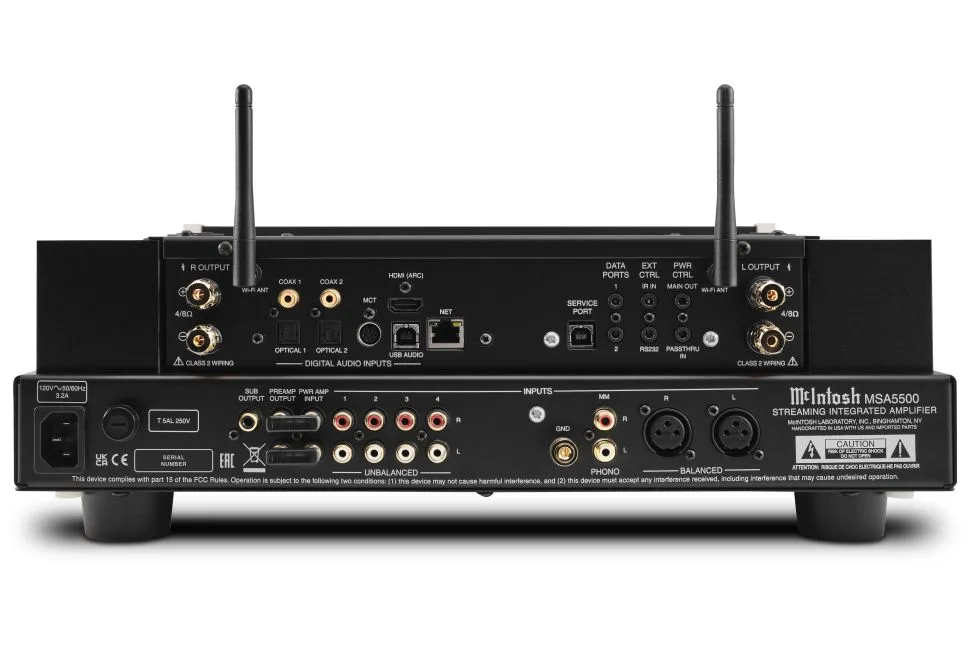
In terms of connectivity, the MSA5500 offers 7 digital inputs and 5 analogue inputs, including a phono input for turntable. The coaxial and optical inputs accept streams up to 24-bit/192 kHz, the USB input goes up to 32-bit/384 kHz in PCM and supports DSD512 as well as DXD up to 384 kHz, while the MCT (DIN) digital input is dedicated to CD and SACD sources. A 1/4-inch headphone output with HXD technology completes the unit.
Streaming relies on the market's leading platforms: AirPlay 2, Bluetooth 5.0 (with AAC, aptX HD and aptX Adaptive), Chromecast, Spotify Connect and TIDAL Connect, with Roon Ready certification for enhanced music library management. Network connection can be made via Wi-Fi 6 using two dedicated antennas or via wired Ethernet.
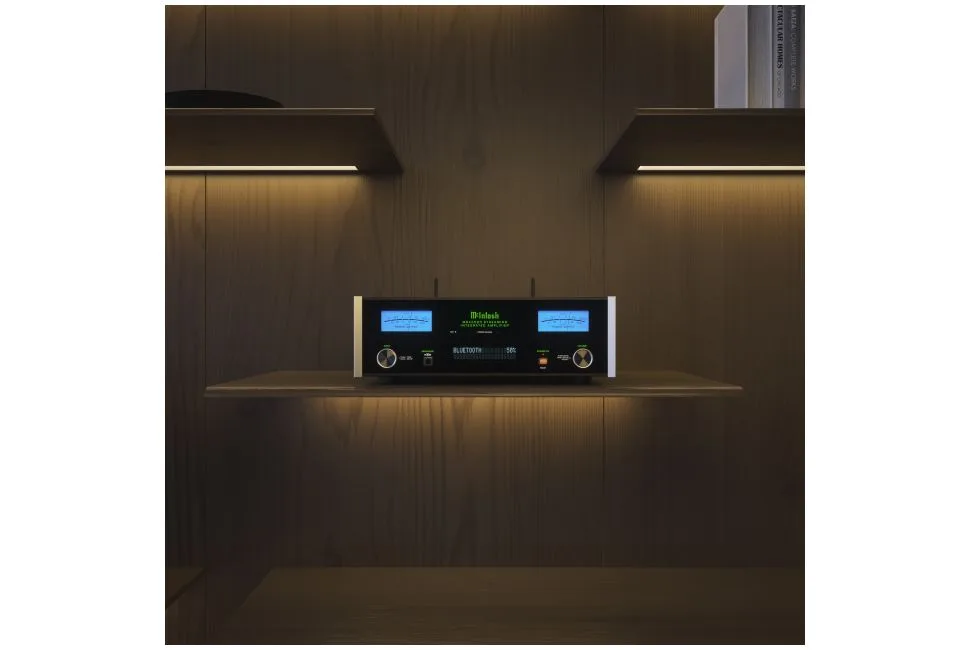
This connectivity and compactness profile is aimed at a user who wants an installation that is simple to control from a smartphone or tablet, without any dedicated app or particular technical skill. It will suit a first high-fidelity system just as well as the upgrade of an existing installation, or a second system in a smaller living space. The presence of an HDMI ARC input, which converts multichannel Dolby and DTS formats to stereo, as well as a subwoofer output, also allows it to become the heart of a light home cinema system paired with a television.
Technical specifications
| Output power | 100 W into 8 ohms, 160 W into 4 ohms |
| Number of channels | 2 |
| Rated power bandwidth | 20 Hz to 20 kHz |
| Total harmonic distortion | 0.005% |
| Dynamic headroom | 1.8 dB |
| Frequency response (+0, 0.5 dB) | 20 Hz to 20 kHz |
| Frequency response (+0, 3 dB) | 10 Hz to 100 kHz |
| Headphone output | 1x 1/4" with HXD |
| Digital to analogue converter (DAC) | 8-channel, PCM/DSD 32-bit/384 kHz, Quad Balanced |
| Digital coaxial input sample rate | 24-bit/44.1 kHz to 192 kHz |
| Digital optical input sample rate | 24-bit/44.1 kHz to 192 kHz |
| MCT (DIN) digital input sample rate | 16-bit/44.1 kHz (CD), DSD64 (SACD) |
| USB digital input sample rate | 32-bit/44.1 kHz to 384 kHz (PCM), DSD64, DSD128, DSD256, DSD512, DXD 352.8 kHz, DXD 384 kHz |
| Dimensions (W x H x D) | 445 x 152 x 476 mm |
| Weight | 17.2 kg |
What to check before buying used
On the Quad Balanced DAC module, a silent channel or distortion at high level indicates a worn component: testing with a PCM file and a DSD file on each digital input allows the converter's integrity to be checked. The HXD headphone output deserves an extended trial to rule out any contact noise, and each analogue and digital input should be tested one by one, particularly the phono input, to detect a crackling volume potentiometer or a poorly contacted socket. It is also recommended to check that the Wi-Fi module is working properly and that the built-in network player's software is up to date before purchase.
Looking for this reference: Mc Intosh MSA 5500 ?
Tell us what you are looking for: our merchants are notified, and one of them may have it in stock.