
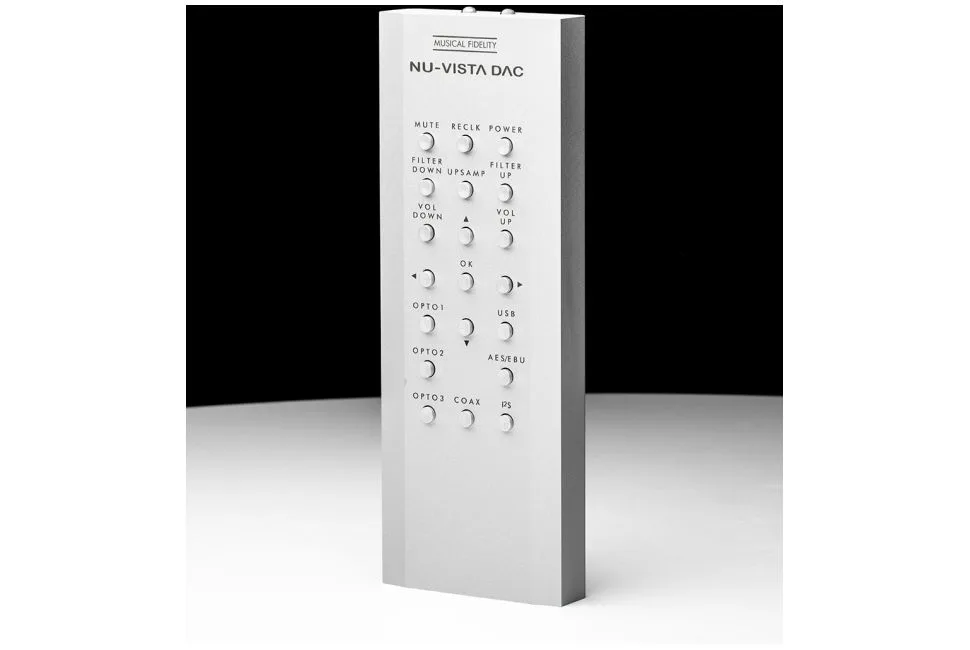

Musical Fidelity Nu-Vista
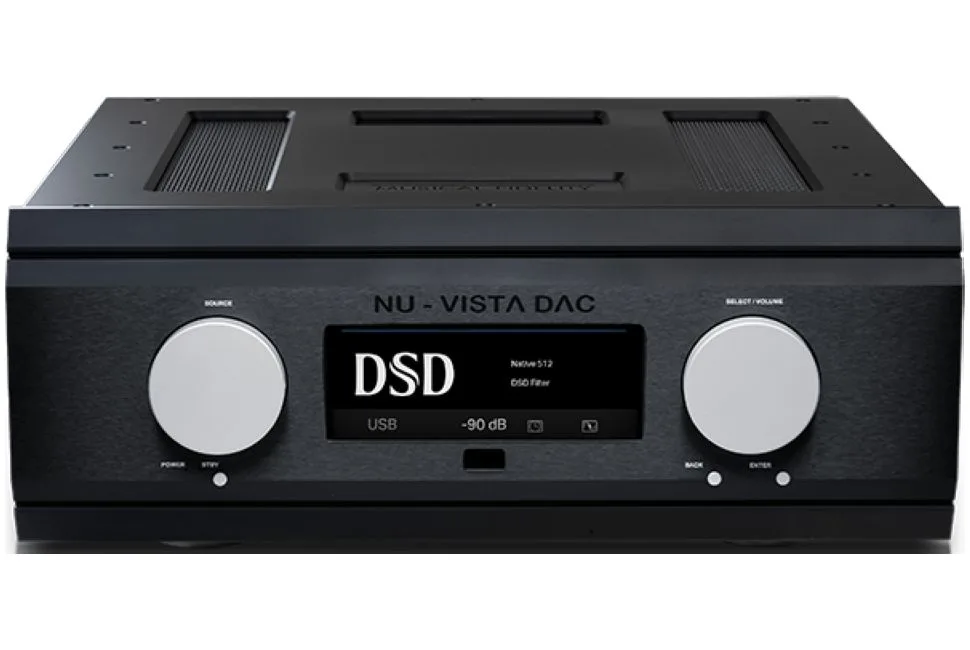
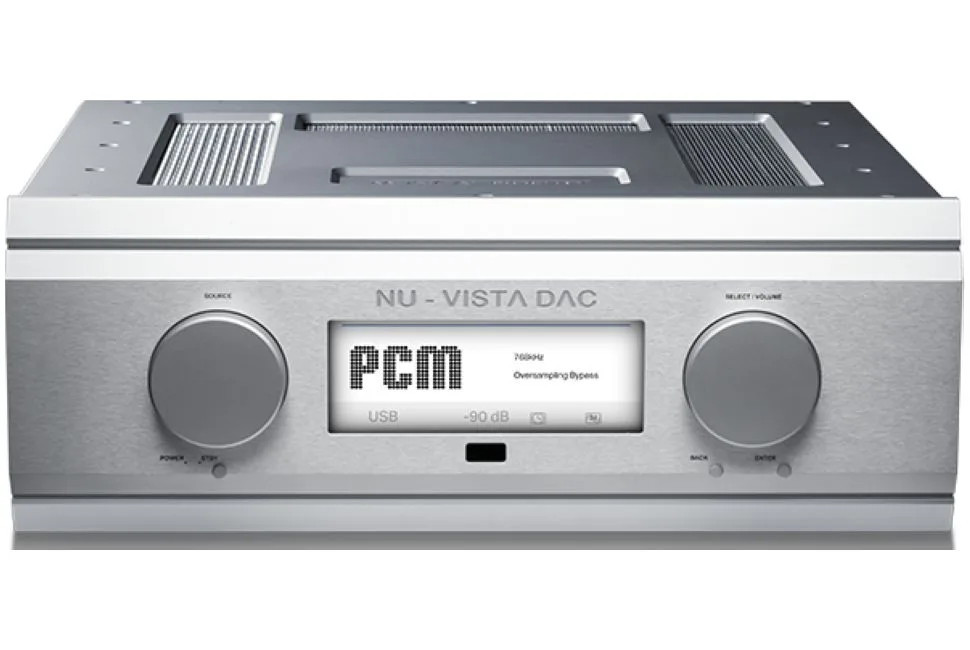
Musical Fidelity Nu-Vista stereo digital-to-analogue converter, with dual ES9038Q2M chip and Nuvistor tube output stage, for a high-level digital source.
Description
The Nu-Vista DAC sits at the top of the Musical Fidelity catalogue in the field of digital-to-analogue conversion. It is placed between dematerialised sources or digital transports and the rest of the chain, and its distinctive feature lies in a rare choice: entrusting the analogue output to Nuvistor 7586 triode tubes rather than to a conventional solid-state stage.
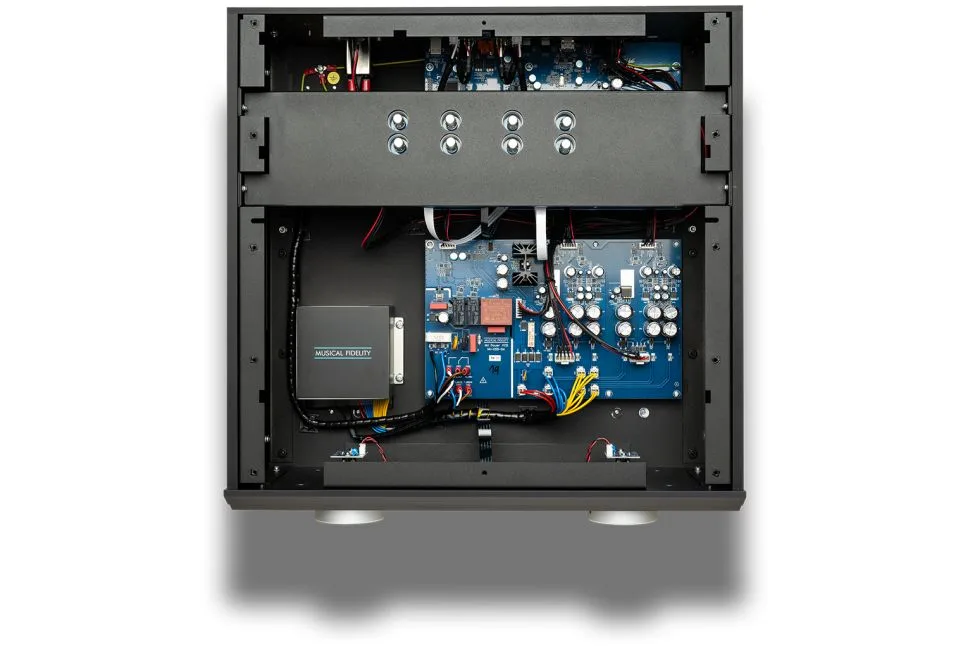
Conversion relies on a 32-bit Hyperstream II circuit implementing two ES9038Q2M chips wired in dual differential configuration, a dual mono architecture in which each channel has its own converter. The signal then passes through a fully balanced stage, with each channel receiving its own discrete buffer operating in class A around the Nuvistors. This low output impedance configuration makes it easier to drive the following stages, including via long cable runs.
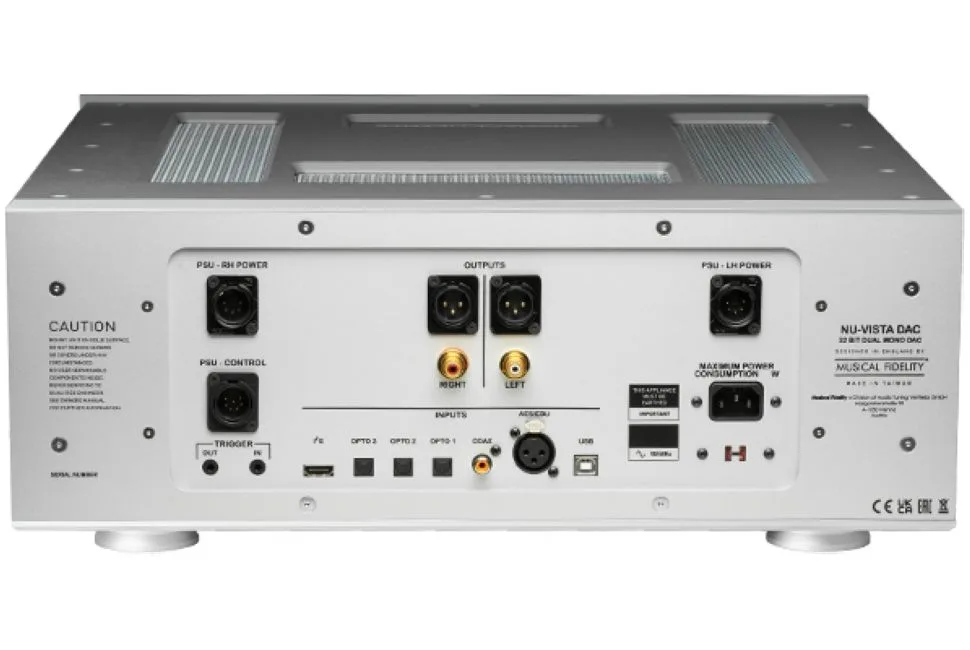
On the connection side, the asynchronous USB input accepts PCM up to 768 kHz as well as DSD 256 in DoP and DSD 512 natively, which covers the full range of formats currently available for purchase or streaming. The electrical and optical inputs, meanwhile, handle streams up to 24-bit/192 kHz:
The fact that the outputs switch between fixed and variable level changes how the unit can be integrated: in fixed position, it becomes one source among others feeding a preamplifier or integrated amplifier; in variable position, it can directly drive power amplifiers or active speakers and become the heart of an entirely digital system, without an intermediate preamplification stage. The dual RCA and XLR outputs offer a choice between a short unbalanced link and a balanced link for more extensive installations.
This converter is aimed at the listener who has already settled on amplification and speakers and wishes to bring their digital source up to the same level, particularly if they listen to high-resolution files or DSD, which many more modest converters only handle partially. The multiple inputs also make it possible to bring several sources together, network player, transport, television, through a single conversion point.
Technical specifications
| DAC circuit | 32-bit Hyperstream II |
| Conversion chips | 2 x ES9038Q2M (dual differential) |
| USB input | 1 x asynchronous USB, up to 768 kHz |
| DSD formats (USB) | DSD 256 (stereo DoP), DSD 512 (native stereo) |
| Digital inputs | 1 x coaxial SPDIF, 3 x optical SPDIF, 1 x AES/EBU |
| SPDIF and AES/EBU input resolution | Up to 24-bit/192 kHz |
| Analogue outputs | 1 x RCA, 1 x balanced XLR, switchable variable/fixed |
| Output stage | Nuvistor 7586 triode tubes, discrete class A, fully balanced |
What to check before buying used
The Nuvistor 7586 tubes in the output stage are the most sensitive element: it is worth asking how many hours they have been used and checking for microphonics, excessive hiss or unbalanced sound between the two channels at start-up. The ES9038Q2M chips themselves do not wear out, but testing the different digital inputs (USB, coaxial, optical, AES/EBU) helps ensure none has failed after years of repeated plugging and unplugging. A check of the RCA and XLR connectors, which can sometimes be weakened by frequent handling, completes the inspection.
Looking for this reference: Nu-Vista ?
Tell us what you are looking for: our merchants are notified, and one of them may have it in stock.