

Vincent SV-237 MK II
Hybrid integrated amplifier combining a 6N16 valve input stage with a transistor output stage, delivering 2 × 150 W into 8 Ω.
Description
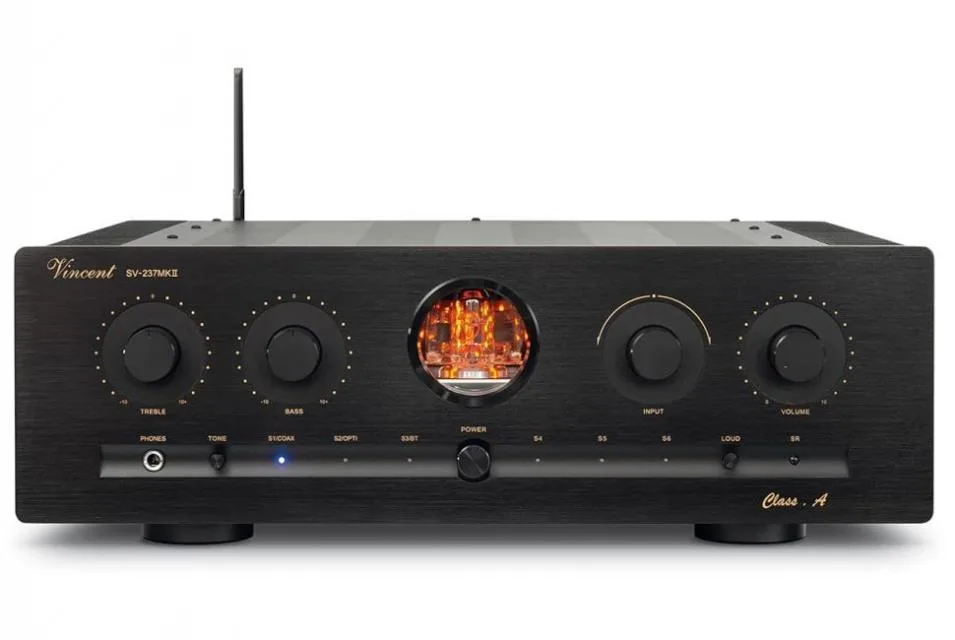
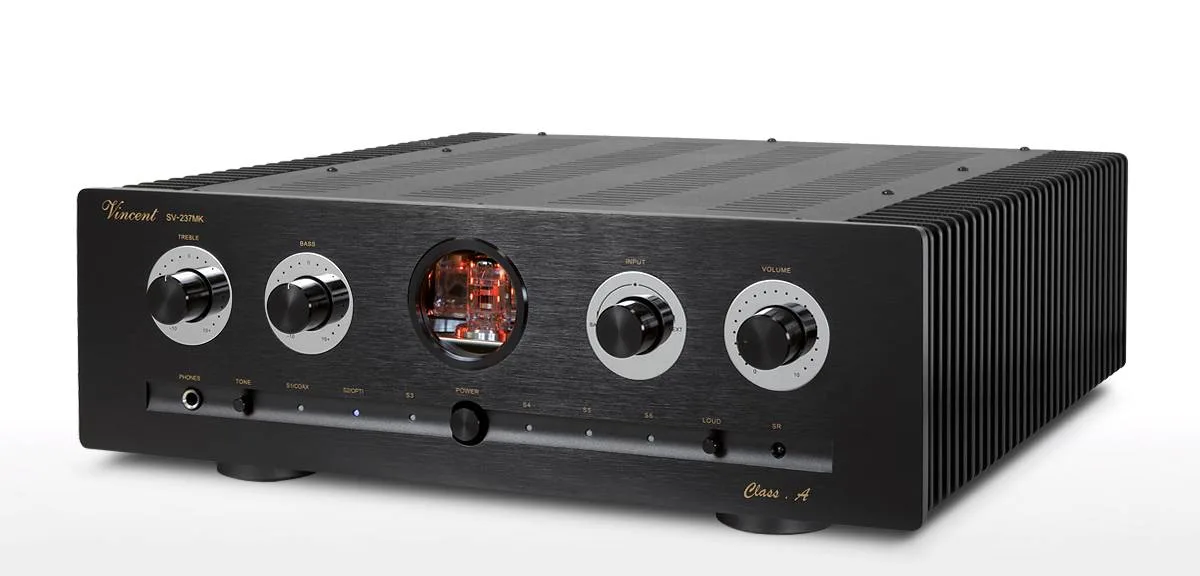
The SV-237 MK II is a hybrid stereo integrated amplifier from Vincent, which combines two amplification technologies within a single chassis: a valve input stage and a transistor output stage. The unit drives speakers directly without the need for a separate power amplifier, and also offers a preamp output for moving up to a multi-unit configuration.
The input stage is built around two 6N16 valves, responsible for shaping the sound colouration before the actual amplification, handled by a transistor output stage capable of delivering 2 × 150 W into 8 Ω. This hybrid architecture aims to combine the characteristic warmth of valves at the input with the control and power handling of a transistor stage at the output. A signal-to-noise ratio above 100 dB and total harmonic distortion below 0.1% reflect an attention to electronic neutrality, while the frequency response extends from 10 Hz to 80 kHz.
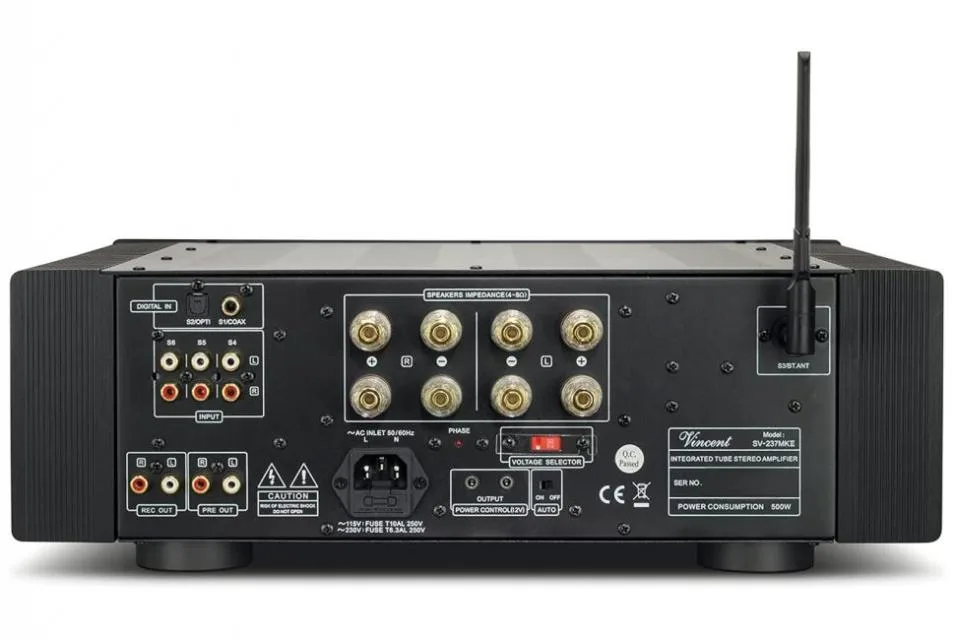
In terms of connectivity, the amplifier features four RCA inputs and one XLR input, allowing several analogue sources to be connected, including one via a balanced link. The RCA pre-out enables connection to an external power amplifier or an active subwoofer.
This type of amplifier is aimed at enthusiasts wishing to drive speakers that are demanding in terms of current, while retaining a sound signature coloured by the valve stage. The available power, 150 W per channel into 8 Ω, allows it to drive relatively difficult loads without straining the unit.
Technical specifications
| Type | Hybrid integrated amplifier (tube + transistor) |
| Power | 2 × 150 W (8 Ω) |
| Input tubes | 2 × 6N16 |
| Signal to noise ratio | > 100 dB |
| Frequency response | 10 Hz – 80 kHz |
| Distortion (THD) | < 0.1 % |
| Inputs | 4 × RCA + 1 × XLR |
| Outputs | Pre-out (RCA) |
| Dimensions (W × H × D) | 435 × 170 × 395 mm |
| Weight | ~18 kg |
What to check before buying used
The 6N16 valves in the input stage are worth checking: microphonics, background noise or reduced gain indicate ageing requiring replacement. Also check the volume potentiometer, often prone to crackling at the end of its travel on heavily used units, as well as the condition of the transistor stage's capacitors. A load test on both channels allows you to verify that output power has not drifted over time.
Looking for a specific product?
Tell us what you are looking for: our merchants are notified, and one of them may have it in stock.