

Yamaha NS-2000A
High-end 3-way floorstanding speaker from Yamaha, with Harmonious Diaphragm cones made of wood fibre and Zylon, for coherent and extended listening.
Comparison with the observed price of the same product new; this is not a reduction on a previous price.
Description
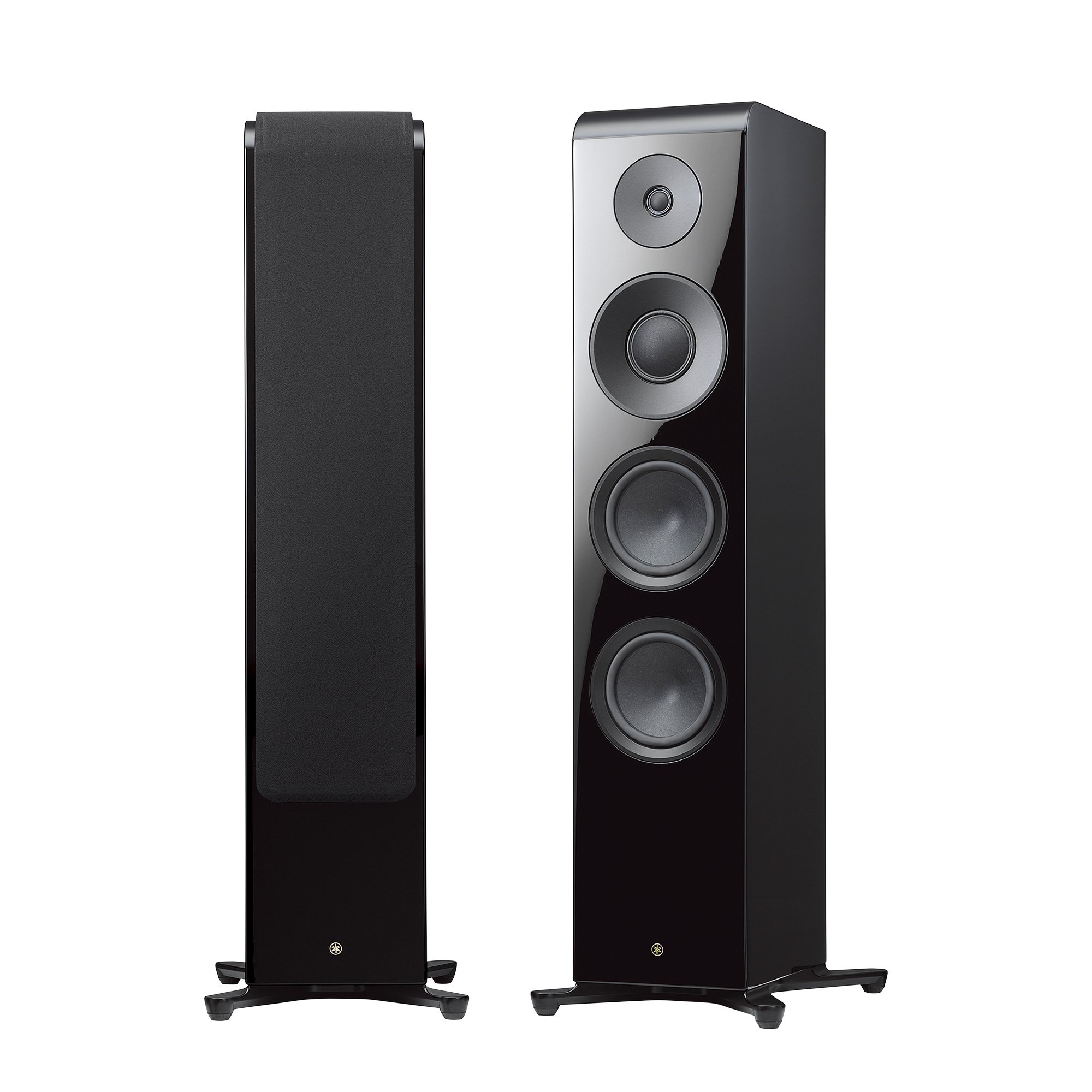
The Yamaha NS-2000A is a 3-way floorstanding speaker designed for demanding hi-fi systems. It is built around a technology unique to Yamaha, the Harmonious Diaphragm, applied to all of its drivers.
This technology consists of a composite diaphragm combining wood fibre and Zylon, a high-strength synthetic polymer. The aim is to achieve a material that is both light and rigid, used identically on the 160 mm woofer, the dedicated midrange and the 30 mm tweeter: by unifying the diaphragm material across all three drivers, Yamaha aims for tonal continuity between the bass, midrange and treble registers. The sensitivity of 88 dB and the nominal impedance of 6 Ω (with a minimum of 3.5 Ω) define the requirements for a matching amplifier, which must be able to handle this minimum impedance without difficulty. The stated frequency response extends from 34 Hz to 65 kHz at −10 dB, a wide range on the treble side reflecting the lightness and rigidity sought for the tweeter.
This speaker is aimed at a demanding listener with electronics capable of driving a minimum impedance of 3.5 Ω, and looking for a high-end floorstanding speaker with a refined design, available in a black finish.
Technical specifications
| Type | 3-way floorstanding speaker |
| Technology | Harmonious Diaphragm (wood fibre + Zylon) |
| Woofer | 160 mm |
| Tweeter | 30 mm |
| Sensitivity | 88 dB |
| Impedance | 6 Ω nominal / 3.5 Ω minimum |
| Frequency response | 34 Hz – 65 kHz (−10 dB) |
| Weight | 29 kg |
| Dimensions (H × W × D) | 1160 × 395 × 463 cm |
| Finish | Black |
Dimensions and weight
What to check before buying used
The composite wood fibre and Zylon diaphragm does not withstand impacts well: check for cracks or dents on the woofer, midrange and tweeter, as well as colour matching between the two speakers. The surrounds of the bass driver should remain supple and free of cracking, a sign of material ageing. Also examine the cabinet, particularly the corners and base, for any swelling from moisture or veneer lifting, and test each driver separately to rule out a fault in the crossover or internal wiring.
Looking for a specific product?
Tell us what you are looking for: our merchants are notified, and one of them may have it in stock.