

Rotel A10 MKII
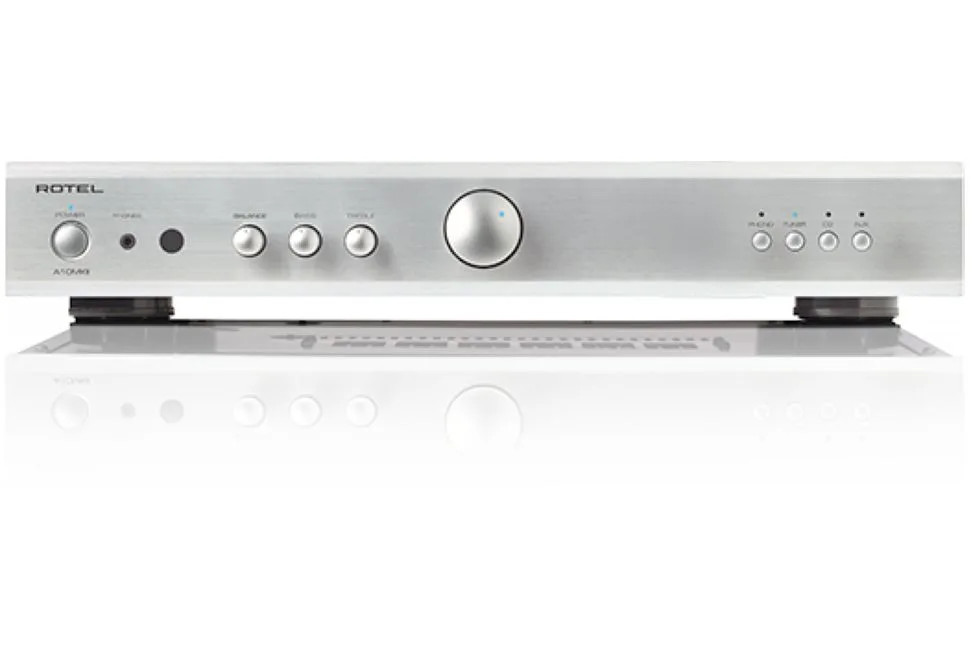
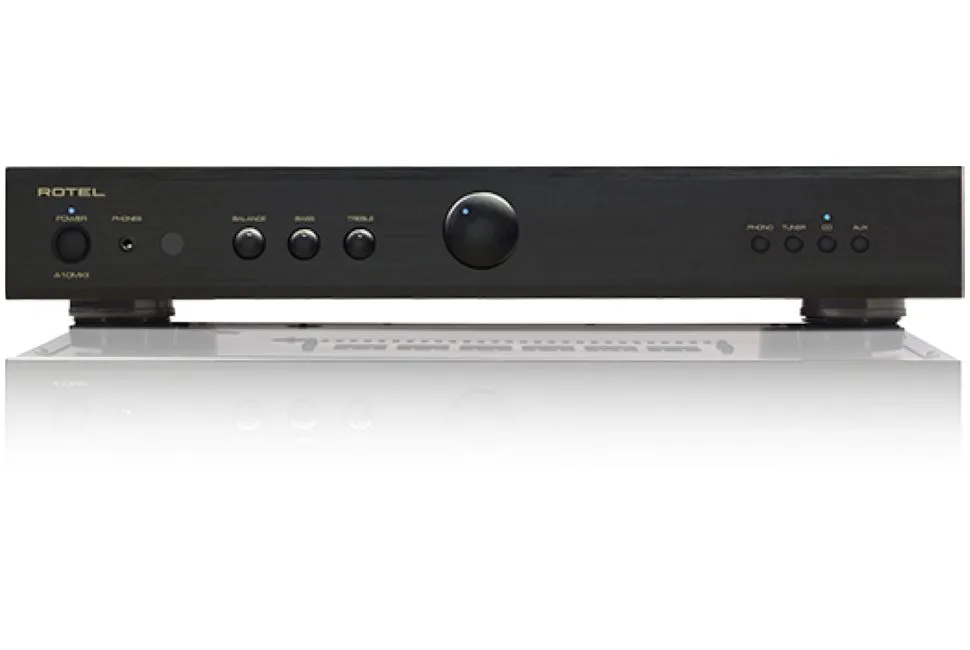
Rotel stereo integrated amplifier fitted with an MM phono stage, three line inputs and a dedicated headphone output, for compact analogue setups.
Description
The A10 MKII is a stereo integrated amplifier from Rotel, designed to drive a pair of speakers from a range of analogue sources. It brings together the preamplification stage, power amplification and a phono input in a single unit, making it a central foundation for a compact hi-fi system.
It delivers 2x50 W into 8 ohms with a total harmonic distortion of 0.03%, a level that allows it to drive speakers of average sensitivity without strain. The damping factor of 220 into 8 ohms reflects good control of the amplifier over the driver's movement, particularly in the bass register. Frequency response extends from 10 Hz to 100 kHz on line input and from 20 Hz to 15 kHz on phono input, while the signal-to-noise ratio reaches 90 dB on line and 85 dB on phono.
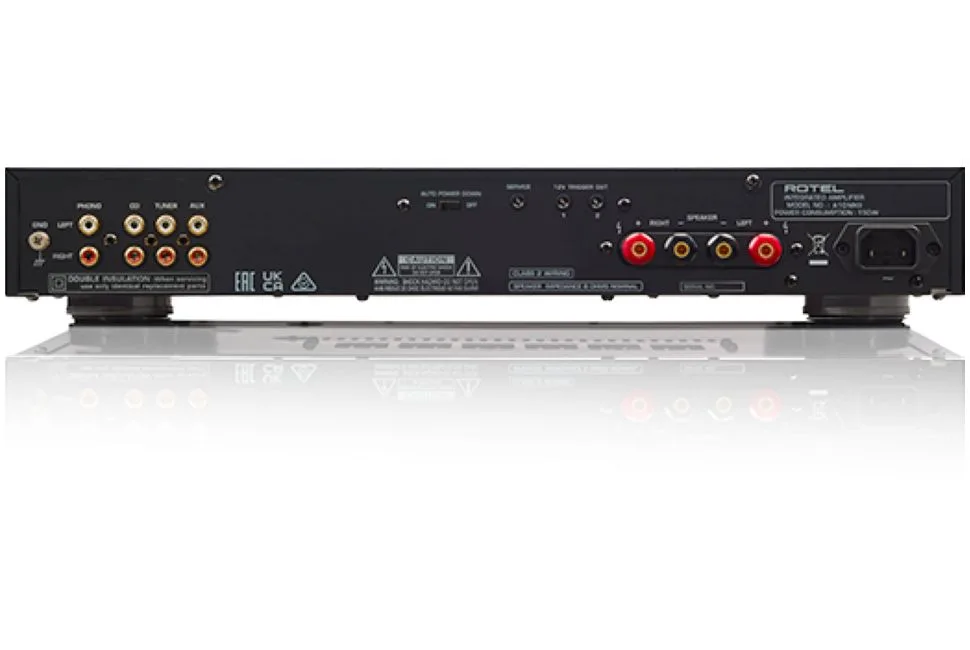
The built-in phono stage is compatible with a moving magnet (MM) cartridge, with a sensitivity of 1.5 mV for an impedance of 47 kohms and an input overload of 50 mV. The three line inputs accept a level of 120 mV for an impedance of 24 kohms and support an input overload of up to 4 V.
This amplifier is aimed at the vinyl enthusiast who wants to connect a turntable fitted with an MM cartridge directly, without a separate phono preamplifier, while retaining the ability to connect several line-level sources. The dedicated headphone output and 12 V trigger outputs also make it a suitable choice for late-night headphone listening or for integration into a remotely controlled multi-device system.
Technical specifications
| Power | 2x50 W into 8 ohms (THD: 0.03%) |
| Frequency response | 10 Hz to 100 kHz (line) and 20 Hz to 15 kHz (phono) |
| Damping factor | 220 into 8 ohms |
| Phono sensitivity | 1.5 mV (47 kohms) |
| Line sensitivity | 120 mV (24 kohms) |
| Phono input overload | 50 mV |
| Line input overload | 4 V |
| Phono S/N ratio | 85 dB |
| Line S/N ratio | 90 dB |
| Dimensions (H × W × D) | 73 x 430 x 347 mm |
| Weight | 6.8 kg |
What to check before buying used
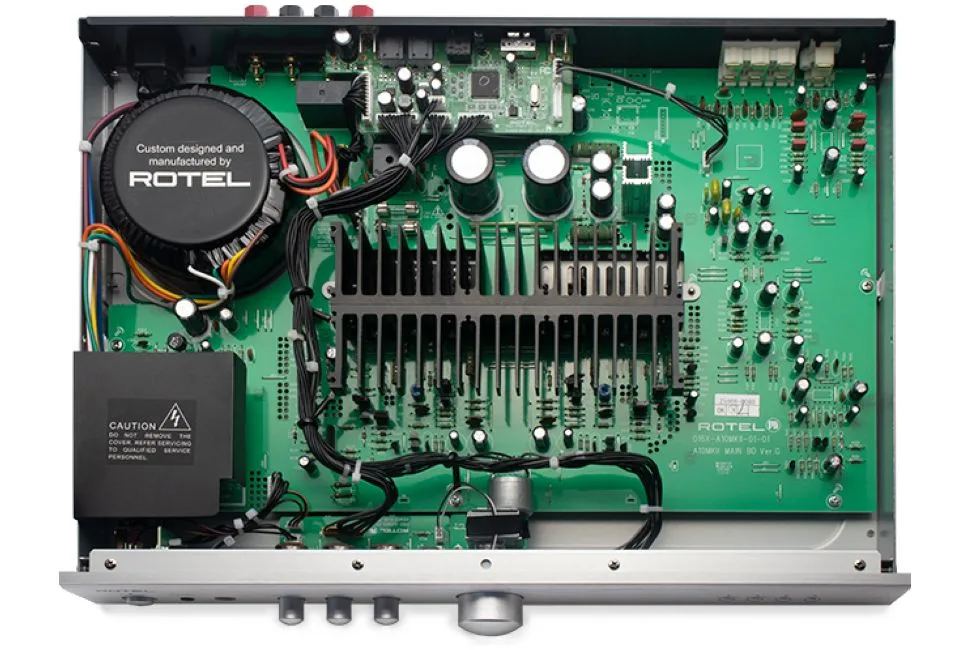
The volume potentiometer deserves testing across its full range: crackling or a level difference between channels indicates wear on the resistive tracks, which cleaning can fix but which sometimes signals that replacement will be needed. After several decades, the power supply capacitors can lose capacitance, resulting in background hum or a loss of dynamics in the bass. Checking the output protection relays is also worthwhile, as their contacts oxidise and can cause intermittent loss of sound.
Looking for this reference: A10 MK II ?
Tell us what you are looking for: our merchants are notified, and one of them may have it in stock.